 Log In

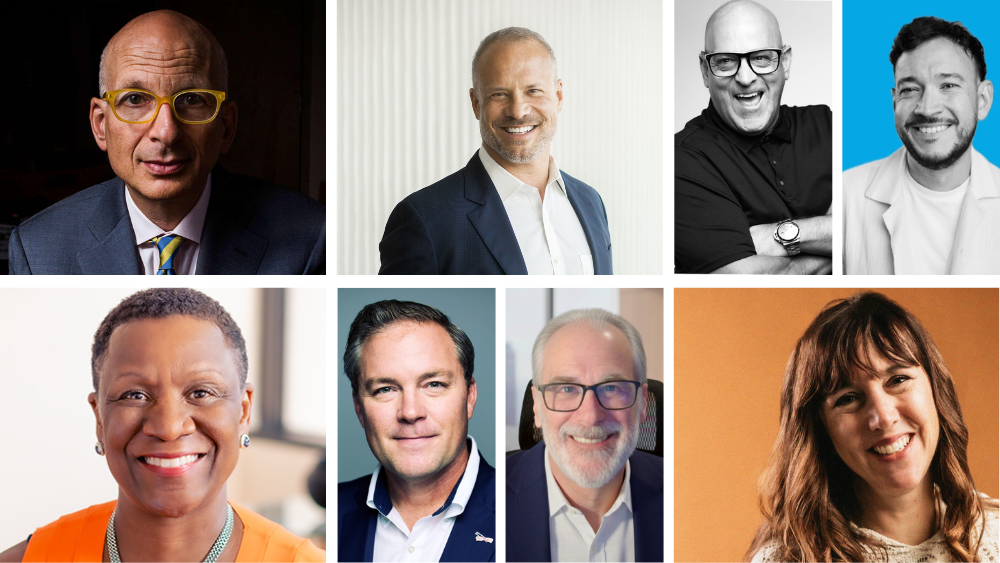
The biggest common denominator among this season’s podcast guests: Put your audience at the center of your design strategy and event execution, even if it means taking a different and unknown course.
The events industry stands at an inflection point. Budget pressures mount, AI promises efficiency, and stakeholders demand measurable ROI. The directive from leaders? Optimize. Do more with less. Execute faster.
But Seth Godin says that’s precisely what not to do, because that is simply doing your job. “It’s not doing the work,” the bestselling author and marketing expert told me. “And I think it’s time for us to take a deep breath and do the work.”
That kind of work — more strategic and uncomfortable, yet transformative — was a common thread in my conversations with podcast guests this season. For Godin, the future belongs to professionals who stop optimizing yesterday’s model and start building tomorrow’s.
“If you’re going to bother running a live event, you better be changing people’s lives,” he said. “What would you do if you were sure it was going to fail? What would be worth doing anyway? Go do that.”
Design Principles for the Future
Speaking of yesterday’s model: Demographics has long been the default lens for event design, podcast guest David Allison said, and it’s time for a different approach. “Demographics push us apart. Values bring us together,” said Allison, founder of the Valuegraphics Project. His research shows demographic targeting fails 90 percent of the time. Instead, planners should design for what attendees truly value — employment security, community, and loyalty.
“Event planners, you need to check yourselves at the door and make sure you’re not doing this for you, you’re doing it for your attendees,” Allison said. “Everything you can possibly think of that’ll help them see that coming to this event is going to help them with their employment security — they’re going to love that.”
Tahira Endean, head of programming at IMEX, takes the idea of values one step further: Measure joy. “People only return to our event if they enjoyed the event,” she said. That’s not a soft metric — it’s a strategic imperative. Using tools from sentiment analysis to facial recognition, planners can now track emotional response in real time. But Endean’s point goes deeper: “Our role as event designers is to make sure that as people go through that anticipation, arrival, experience, that there are enough positive, memorable moments that they want to return.”
Her advice for 2026? Design for connection, not convenience. Smaller tables, lower volume levels, and intentional spaces for dialogue beat flashy activations every time. “When we’re truly passionate about something, when we truly care, it’s going to be hard and it’s going to be worth it,” Endean said.
Revenue and Trust Models
For associations, the pressure to adapt is existential. “We’re not in an environment where we have a choice. We need to shift because the world is shifting around us,” said Michelle Mason, president and CEO of ASAE. That shift starts with listening. “Listening to your members, understanding what your members are telling you in terms of their needs, not what the organization believes it needs to provide the member.”
Mason calls this “conscious inclusion” — embedding DEI into the fabric of operations so it’s not a standalone target for attack but a core value. And she urges leaders to act, even imperfectly: “You don’t have to go from 0 to 100, but do something.”
On the sponsorship side, the old pay-for-logo model is simply not cutting it anymore. “You can only create value two ways: exceptionality and price,” said Sean Soth, president of Hi-Fidelity Group. That means understanding not just your customer, but your customer’s customer.
“If I send someone survey results, that’s just a waste of their time. If I highlight why our audience is important and how I think that particular exhibitor or sponsor can benefit or make a difference, that’s contextual.”
Dan Cole, senior director of exposition sales at AVIXA, agrees: Transparency and trust are non-negotiable. “We’re not afraid, without being specific, to say, look, here’s what does not work. It’s a great branding opportunity for you, but the audience is not going to interpret it as such and it could damage your brand.”
Which brings me to perhaps the biggest common denominator among this season’s podcast guests: Put your audience at the center of your design strategy and event execution, even if it means taking a different and unknown course. That is the kind of hard work that will pay off.
Magdalina Atanassova is digital media editor at Convene.
Listen to the complete Season 9 of the Convene Podcast for full conversations:
- S09E01: Seth Godin on Making Events Magical: Leadership, AI, and the Future of Work
- S09E02: David Allison on Why Values Beat Demographics in Event Design
- S09E03: Trust, Budgets & Hybrid Impact: MC2’s Ben Nazario & Bruno Silva on Event Marketing That Actually Moves the Needle
- S09E04: Michelle Mason on Rebuilding Association Value: Revenue Models, Retention, and “Conscious Inclusion”
- S09E05: Rethinking Sponsorships and Exhibitions with Sean Soth and Dan Cole: Building ROI, Trust, and Value in 2026
- S09E06: Tahira Endean on Measuring Joy, Leading Change, and Designing Events That Connect