 Log In


Getting attendees to return to your events requires an understanding of their core objectives according to Freeman’s Ken Holsinger.
At the end of last year, Freeman published its End-of-Year Recap to provide highlights of the event company’s research conducted over 2025 — what Ken Holsinger, Freeman’s senior vice president of industry research and insights, called “CliffsNotes for a planner going forward.”
Convene spoke with Holsinger to learn what stood out to him from this compilation of insights. Here’s what came up:
Uncertainty
“The surprise to me is how well we navigated the uncertainty of 2025,” he said. “I shouldn’t be surprised — the industry is good at navigating this kind of stuff,” which he called “learned resilience.”
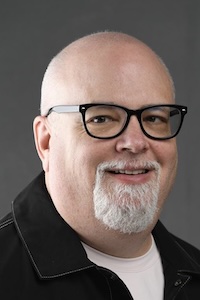
Ken Holsinger
Holsinger said that many segments in the events industry struggled last year, especially government and health-care sectors. He said that “core B2B channels that are focused on supply chain, retail, manufacturing” performed really well last year because “we’ve learned and our customers have learned to come together face to face to build trust and to solve problems.
“I think it emphasized for me not only our resilience, but also — I sound like a PR rep for the meetings industry — man, meetings are important.”
As an industry, Holsinger said, “we found our sea legs. It’s not that the uncertainty has gone away, [it’s that] we’ve proven that we figure stuff out and that the channel that people trust is ours. Let’s own that. Let’s charge into it.”
Retention Is a Major Concern
When talking with planners, from for-profits to associations, to even some of the corporate meeting planners, Holsinger has been struck by their low retention rates (returning attendees). “No one talks about it,” he said. Freeman research has revealed that the retention rate for most events is the low 30s.
Part of that is the generational shift. “Our most loyal attendees have been our boomers — they are all at or above retirement age right now,” he said. “The next generation coming in, they’re telling us they trust the events as a channel, but they’re not loyal yet” — loyalty and trust are “built over time.”
Another factor affecting retention is that potential attendees have a lot of other choices. “We are no longer in a broadcast market of ABC, NBC, and CBS,” he said. “We have tons of channels — and events in those channels, from micro-events to pop-ups to big events to net new.”
Pay Attention to What They Want
Getting attendees to return to your events requires an understanding of their core objectives, Holsinger said. Attendees responding to Freeman’s surveys, he said, “told us multiple ways in 2025 [that] if in networking, connecting, commerce, product discovery, content, and learning, we just listened to their objectives,” they would return. “If they connected with someone — 51 percent higher retention,” he said. “If they were able to get a hands-on demonstration at a booth, it would increase their likelihood to buy by 90 percent. If they were able to meet with a subject-matter expert, their satisfaction would rise by almost 80 percent. If they were able to actually have a peak moment tied to their core objectives, they’ll return to your event.
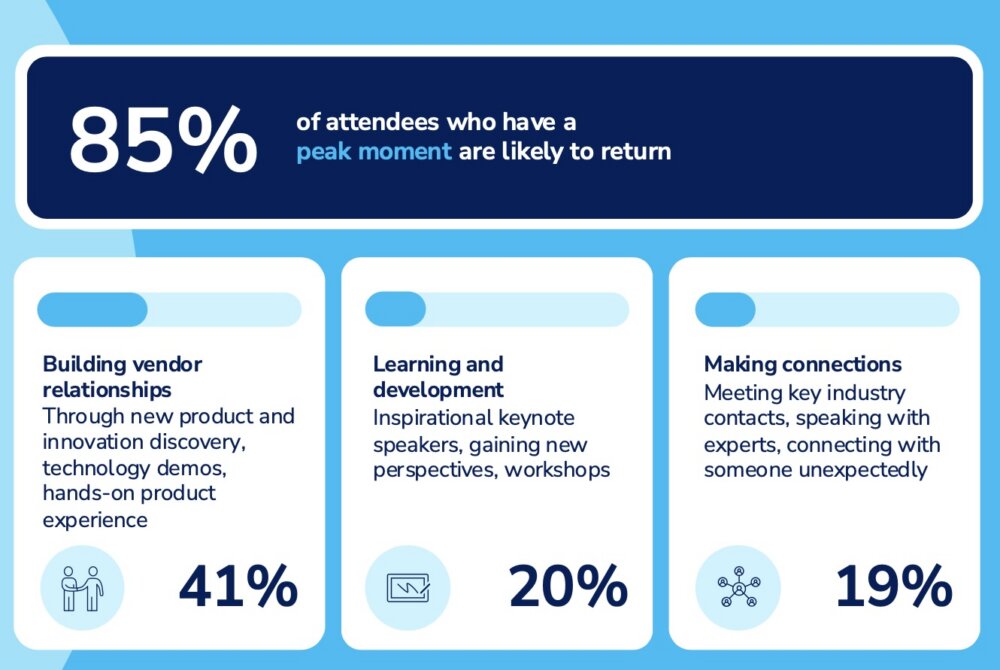
“The opportunity for us to lower customer-acquisition costs and build loyalty is not going to happen by accident. It’s going to be intentional. We have to focus on the new generation, understand what’s the same and lean in, understand what’s different, and adapt and innovate. The only way we’re going to do that is a lot of listening.”
Unfortunately, many events are stuck in rinse-and-repeat mode, he said. “We all thought that the pandemic would make major shifts in our industry, and we locked back in. We always say that the difference between a groove and a rut is pretty close — are we in a groove or are we in a rut? When I look back at the research that we’ve done, I see the optimism of resilience, but I see the challenges.”
Chief among them: high costs. “But lifting profitability, I think, is led by retention — how do we take that 30-percent [retention rate] and move it to 35 percent? How do we focus maniacally on understanding those core objectives? What we found in looking at over 200 events, we didn’t find a single one that had retention on their dashboard.”
Holsinger said it’s a matter of asking attendees in the registration process what their core objectives are and then focusing on that throughout the event, perhaps with the event app recommending sessions and activities based on those goals. And instead of post-event feedback surveys asking attendees if they would recommend the event to others, we should ask them if we met their core objectives. “What we found is that less than 1 percent of first-timers fill out your post-event survey if they’re not planning to return,” he said. “If they don’t return, they’re not telling you why. That means that your loyalists are telling you what you should do.”
 Subscribe to Convene.
Want deep-dive insights on events delivered to your inbox? Sign up for our newsletters
The Problem of Late Registration and ‘Desire Pathing’
The other piece that stood out to Holsinger is the challenge of late registration. But, he said, “the bottom line is early registration doesn’t benefit the attendee. It benefits you as a planner, and it benefits the exhibitor to know who’s coming. The reality is the WIIFM principle (what’s in it for me) has to come into play.”
He thinks we should look at registration differently. Early-bird rates aren’t enough of an enticement, he said. “$100 is not going to make a difference. What if early reg gave them different access, different opportunities, different experiences? We can’t personalize the event for everyone because we’re boiling the ocean, but what if we could personalize the event for 1,000 pre-registrants?”
To help design for this, Holsinger refers to a concept in his background in software user experience design called “desire pathing.” He gives a more concrete example: At college campuses, pathways between buildings were originally designed for aesthetics, with statues often placed in the middle of commons. But students don’t take those paths — they cut across lawns to save time traveling between classes.
“Go to any aerial view — look at Princeton on Google Maps, look at Yale, look at Harvard, look at all the major institutions that are like that. You’ll see criss-crossed paved paths now. It’s called ‘desire pathing.’ [Administrators] said, ‘Let’s pave where the students walk instead of trying to force them’” to walk where we want them to walk.
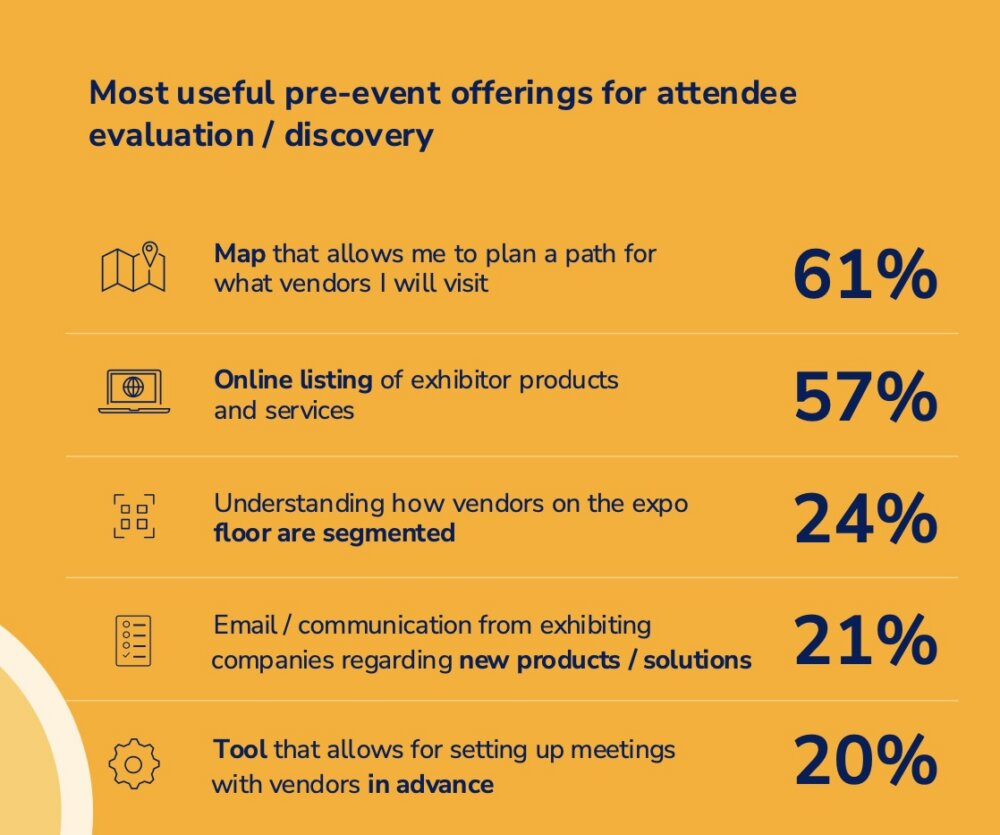
“I think planners need to understand desire pathing,” Holsinger said. “The No. 1 reason attendees say they’re dissatisfied with events is navigating trade-show floors, navigating the exhibit hall. They say it’s the most difficult thing, and the younger they are, the less it makes sense. The map can’t fix our design problem. We have to do better design. We have to understand and focus in on what is it that they’re already doing? Are they looking at aisle signs? Do they understand the addressing system? How do they navigate to find things? Technology is best used when we understand the user.”
Attendees’ second point of frustration is that events are over-programmed, Holsinger said. “If you market to them how big it is, how many sessions you have, it’s not working. Do you want to go to the Golden Corral or Gordon Ramsay’s three-star Michelin Restaurant? Planners need more Gordon Ramsay in their lives. We need to cut the menu down.”
What’s Next
“If you can do it on Zoom, don’t do it in the room.” That’s a refrain from the report that has grown out of what we learned during the pandemic: Learning has to be an interactive experience. Holsinger said the next piece of research Freeman is embarking on is the future of adult learning in the meetings and conferences environment. “We’re going to talk about attention spans. We’re going to talk about learning methodologies,” he said. “How do we actually retain information and what’s the best environment for it — not only what attendees want, not what planners think, but also what learning science says, neuroscience says. As we unpack learning, we’re going to start with traditional learning at a conference, the general session and the breakouts.”
As for the general sessions, “we are showing across associations that the general sessions have shrunk by almost 50 percent since the pandemic,” he said. “The event hasn’t, but attendees are choosing with their feet. Some of that’s probably our own desire to do other things. Some of it’s probably reflecting on the content.”
And some of that is generational, Holsinger said. Next-gen attendees question more than other generations whether being in the general session is worth their time.
Overall, research has shown that celebrity speakers on the main stage aren’t the reason attendees will commit to an event, he said. “The idea that it attracts them to come, the challenge we have as planners, we’ll say, ‘Well, they seem to show up when President Obama is in the room.’ Well, yes, but did that get them on an airplane? No. What got them on an airplane is connecting with others, finding products, core stuff. Attendees are not looking for impact, they’re looking to be involved. That’s a major shift.”
Holsinger isn’t advocating that the general session be scrapped. “It just means that we need to right-size it, be focused on the objective, understand what else they’re choosing, and to a certain extent, be okay with it. We have treated them like a captive audience — ‘we’re going to have the general session, and nothing else can go on. We’re going to close down everything but the expo hall. We’re going to force them in there.’”
While he recognized that may be an exaggeration, the way we think about the general session — and how much of the event is designed — raises this key question for event organizers regarding their audience: “Do we want them to be captive or captivated?”
Michelle Russell is editor in chief of Convene.