 Log In

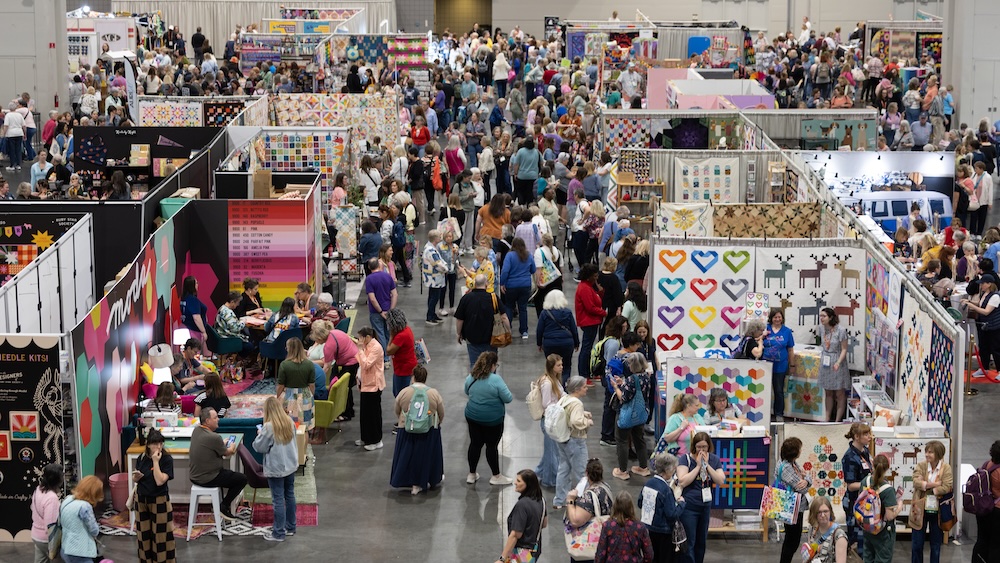
QuiltCon 2026, the world’s largest annual modern quilting event, brought 29,000 attendees in February to the Raleigh Convention Center in Raleigh, North Carolina. The convention included a juried competition, notable this year for dozens of quilts sparking conversations around social issues, a 150,000-square-foot exhibit hall, and 130-plus workshops.
If your mental picture of quilting is sweet old ladies stitching mosaic floral bedding, QuiltCon 2026, held Feb. 19-22 at the Raleigh Convention Center in Raleigh, North Carolina, would have shaken those assumptions. The event made the rounds on social media for the dozens of innovative quilts on display that made strong political statements of resistance, expressing quiltmakers’ sense of anger over current U.S. administration policies.
Is this something new? Actually, it follows a long tradition of craftspeople expressing themselves in fabric around social causes, Elizabeth Dackson, director of events for the Modern Quilt Guild, told Convene via email, although the guild, which produces the annual QuiltCon, is less than 20 years old. We asked her to share the evolution of the event — a juried quilt show with workshops, lectures, and a vendor hall — and its place in the social history of quilting.
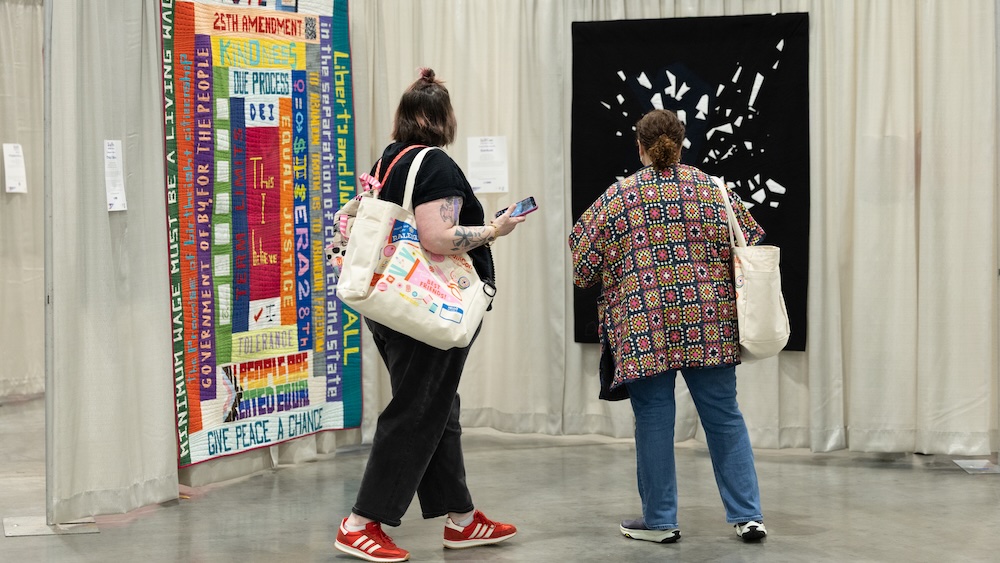
Each quilt selected by a jury is based on “design, visual impact, and elements of the modern aesthetic, in the purpose of curating a unique and vibrant show,” Dackson said.
The first QuiltCon was held in 2013. How has the event evolved over the past 13 years?
A lot of things about QuiltCon have grown over the last 13 years, from attendance to offerings, and I’d like to think we’ve fine-tuned the event considerably, homing in on areas to improve throughout to continually try to grow and improve the event. As an organization, the behind the scenes has changed considerably over the years, with our 2013 show arriving in boxes to professional road cases [heavy-duty protective containers designed for touring professionals] in 2026, for example.
QuiltCon debuted in 2013 with approximately 300 quilts in total shown, compared to just under 600 quilts in 2026. Over 1,300 attendees participated in the first show with just under 50 vendors. In 2026, we had just over 29,000 attendees across the four days of the show and nearly 130 vendors. We were very fortunate to come back after COVID with strong growth and have seen that growth continue year over year. Our footprint continues to grow, with the first QuiltCon exhibition space being around 70,000 square feet, to 150,000 square feet in Raleigh. QuiltCon 2013 had 55 workshops and 26 lectures; QuiltCon 2026 had 138 workshops and 28 lectures.
One of the things that’s often most interesting about modern quilting is that the quilts themselves rarely feel tied to a certain time, unless they are relating to current events that of course then indicate a clear time. Many of the quilts that hung at QuiltCon 2013 could have hung at QuiltCon 2026, though I do think that makers have increased their technique and artistry over the years. When I look at quilts of QuiltCon 2013 compared to the quilts of QuiltCon 2026, the biggest changes I see relate to technique. I notice more precision, a wider variety of sewing and quilting techniques in use, and also more callbacks to traditional quilting — using a technique that is considered traditional, like tying on a quilt for example, and implementing it in a new way. Our quilt show is juried, and has been since the show began in 2013, and the number of quilts submitted to the jury each year continues to grow. The jury for QuiltCon 2026 reviewed over 2,000 quilts to determine which quilts would hang at this year’s show.
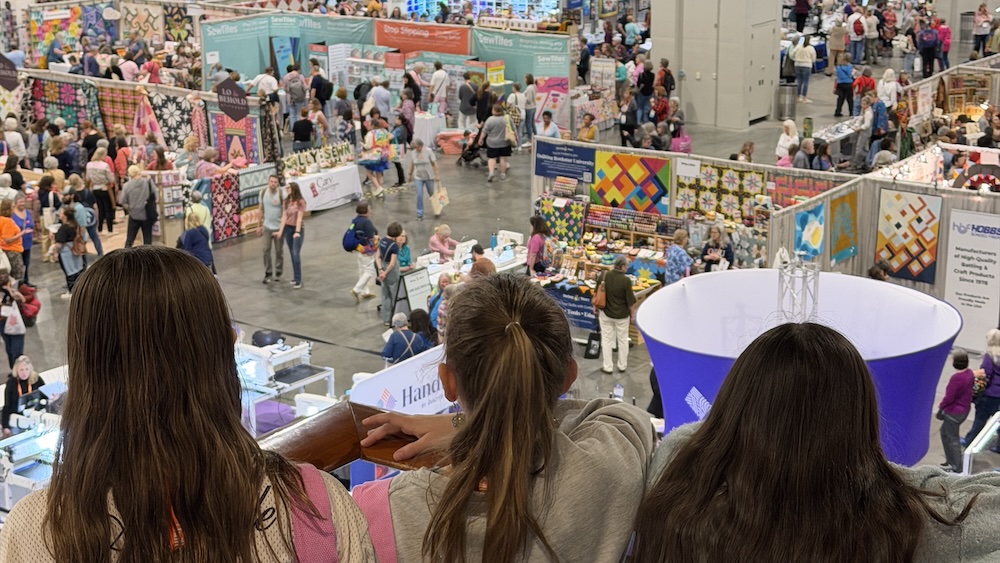
“It’s especially fun when we see the youth makers come to see their quilts in the show,” Dackson said.
I saw a blog post written after last year’s QuiltCon by a quilter attendee who shared that there is a difference of opinion in the quilting community about whether works should tackle controversial topics. Yet at this year’s event, there was a good deal of positive social media covering quilts that made a social statement. Were there more entries that were devoted to social causes this year?
Like many other large groups, there is surely always a difference of opinion, however the vast majority of QuiltCon attendees know that there will be quilts about controversial topics. In the jurying of quilts for the show, the jury is focused specifically on the artistic merit and technique of the pieces submitted, not the message they may or may not be conveying. Jurors see a photo of the front of the quilt, a photo of the back of the quilt, and a close-up detail photo, in addition to the quilt’s title, category entered, size, techniques used, and whether or not it is an original design. An entrant’s artist statement, name, or other identifying information is not released to the jury. The photos are truly what the jurors use to evaluate each quilt, and they give it a numerical rating. After all quilts are juried, a cut score is determined to figure out which quilts are accepted. Approximately 18-23 percent of quilts are chosen to hang at the event, so it is extremely competitive. Our jurors view over 2,000 quilts in the span of eight weeks and carefully evaluate each based on design, visual impact, and elements of the modern aesthetic, in the purpose of curating a unique and vibrant show.
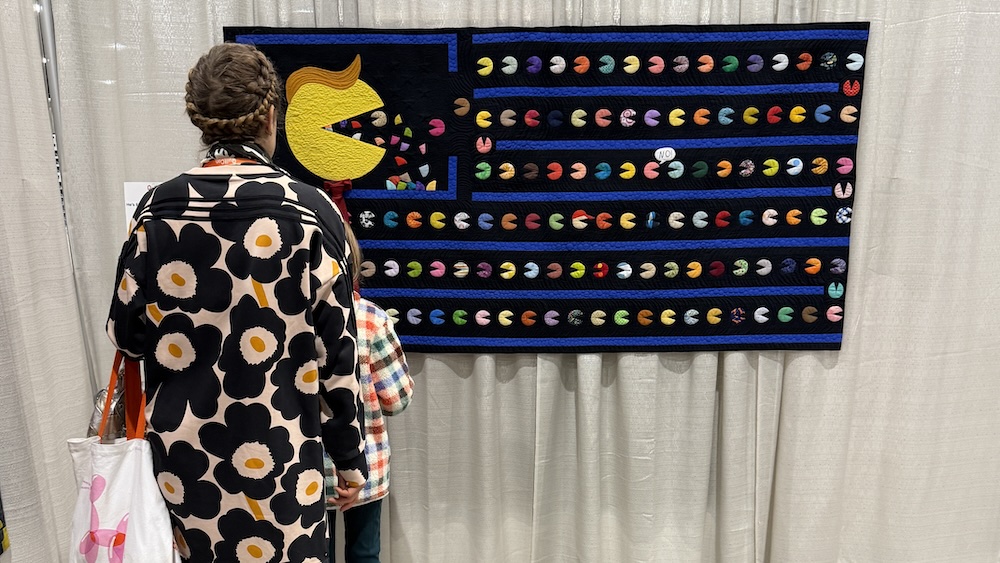
“He’s Eating the Dogs, He’s Eating the Cats,” by Bridget Pasternak
Every year, there are a large number of quilts communicating emotional journeys, personal statements, political feelings, current events, and any number of obvious and hidden layers. We do not censor makers, nor will we ever. We don’t track the quantity of quilts devoted to social causes, or any other topic, so it’s hard to say for certain if there were more entries in that vein. I would say that there was much more discussion about them this year at the show than in years past.
 Subscribe to Convene.
Want deep-dive insights on events delivered to your inbox? Sign up for our newsletters.
Has it become more accepted that quilting — like other needlecraft — can be used to spark a conversation or reflect the artist’s view on a social issue? Do you think this creates more of a community among quilters or sows division?
Quilting itself is a language in fiber, and as such, it has a very long history of storytelling and expression. From the 19th century abolitionist movement to the AIDS Memorial Quilt that began in 1987, quilting has been a way to comment on social issues and experiences, with makers sharing their messages, finding solidarity and community along the way. In the 1800s, women began to gather in groups to work on quilts. At a time when there were limits on what was appropriate for women to say or do, these “quilting bees” became safe spaces for women to discuss social issues in addition to family and neighborhood news, and many believe that bees fostered the foundation for social movements for women’s rights.
In modern times, I’ve noticed an increase of people taking up fiber-related crafts over the last several years, with a particular uptick starting in 2020 during the COVID outbreak. With our increasing dependence on technology, crafting is an analog task that is often meditative and productive, which is a unique combination, I think. Much like the quilting bees of yesteryear, I think makers are building community around their makes, and crafting your own personal values is a way to create a like-minded community around oneself.
What was the response this year from attendees to the quilts that aimed to convey a message rather than be simply admired for their artistry, craftsmanship, needlework, and innovative use of color and design? Does how well a message is conveyed factor into the selection by the jury?
Most attendees were excited to see all the quilts this year, especially those that told a story or conveyed a message. The interesting thing to me is really that all of the quilts fall into this category, whether it’s an overt, clear message with text on a quilt, or something more covert or hidden — every quilt tells a story. You just have to be willing to listen.
The throngs of quilting enthusiasts who came to Raleigh would no doubt agree the craft is “a language in fiber.”
For QuiltCon, our jury focuses on selecting quilts that best represent modern quilting and fit into one of the 12 show categories. The goal of the show overall is to be visually appealing and inspiring, to support and encourage the growth and development of modern quilting, in keeping with the mission of the Modern Quilt Guild, the nonprofit member organization that puts on QuiltCon annually. Jurors focus on visual impact, originality and innovation, as well as visual appeal and composition.
The message of a quilt does not factor into the jury’s decision to show a quilt, nor does it factor into the awards the judges give. Much like the jurors, the judges’ decisions are based primarily on overall aesthetic value, originality, and design of the quilts. Workmanship is sometimes a factor, as it can affect the overall visual impact, but message is not.
Are you noticing a new generation has become interested in modern quilting?
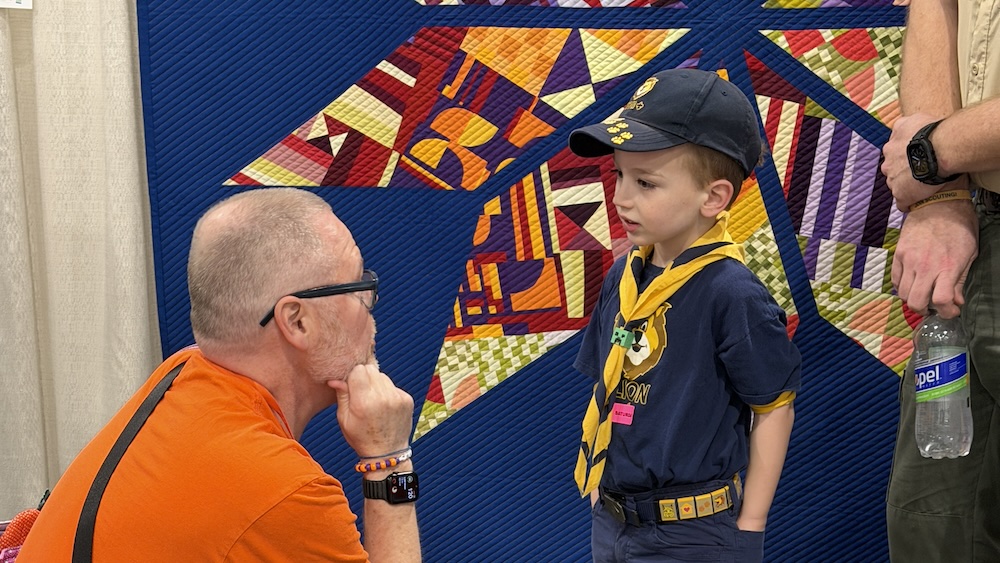
I love seeing the youth category at the show — seeing the future of quilting! It’s especially fun when we see the youth makers come to see their quilts in the show. They’re so excited and often ready to chat about their quilt with whoever will listen. There were loads of families in attendance this year, lots of multiple generations of quilters attending together — it’s just so exciting to me to see that this craft is so strong and vibrant and quilting is not going anywhere. It’s been around for hundreds of years, and is going to continue to be around, stitching itself into the fabric of our history.
Michelle Russell is editor in chief of Convene.