 Log In

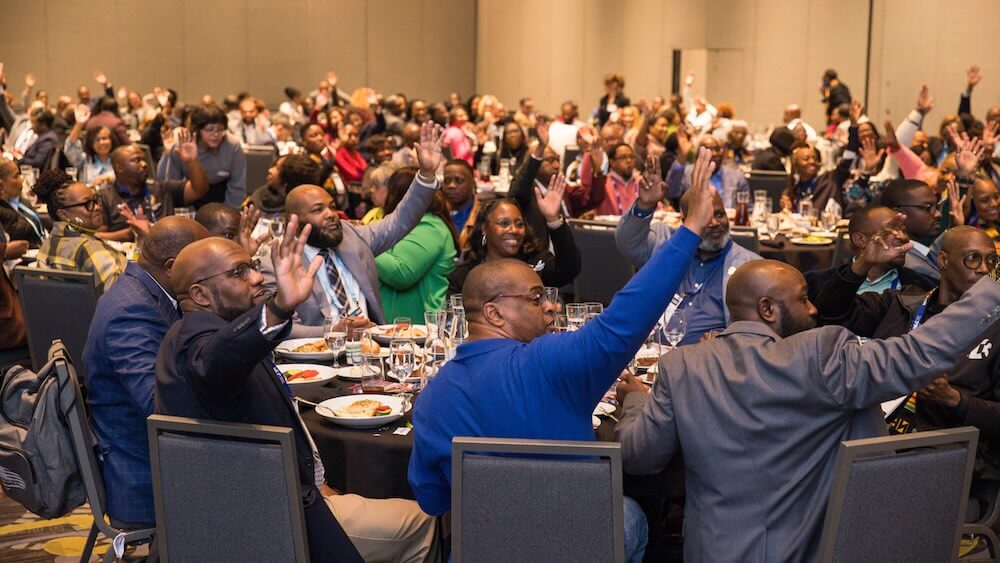
The National League of Cities has ‘an expectation around behavior, including how they are with one another’ that has positively influenced its meetings culture.
One way to establish a civil environment at events is by publishing a code of conduct that goes beyond zero-tolerance harassment policies, National League of Cities Director of Business Events Janice Pauline said. “We have a code of conduct that includes respect for difference of opinion as part of it. We are a nonpartisan organization. We have people whose beliefs and opinions vary a great deal and they need to feel they are in a safe, respectful environment when attending our events,” she said, “although local leaders are not as partisan as what you might have at the national level.” Most people go into local government “because they want to fix something in their community.” Often people look to join the city council because something is going on in the community that they don’t like and they want to do something about it, Pauline added.
For polarization, partisanship, and contempt “to be creeping in at the local level is very unusual and has been very uncomfortable for a lot of the local elected officials,” Pauline said, “and they are frightened to see violence happening against local officials. I worry it is going to be a deterrent to good, honest people wanting to be involved in their local governments.”
An organization without a code of conduct for conference participants is a “sitting duck,” she said, “potentially opening themselves up to serious criticism and even liability. It’s more than harassment — it really can be about how you communicate and interact with people who have a different idea than you or a different opinion.” NLC requires registrants to check a box that they have read and agree to the code of conduct as they go through the registration process, and again, when they are picking up their badges on site.
Pauline said she has never had any pushback about the code. It helps to raise “a conscious awareness that, ‘Hey, you’re in this group now. You’re not with a small group of people with a similar ideology, or a group of friends at lunch,’” she said. “‘You have to remember who’s around you and be mindful of that…. If you want to be here and you want to be a part of things, you’ve got to meet this standard.’”
For Pauline, “It goes back to treating people with dignity and respect. People have different ideas and different opinions and different likes. It doesn’t mean they’re wrong because they like vanilla and not chocolate, or chocolate and not vanilla. It’s agree to disagree. That used to be okay. For whatever reason, I feel like in this environment, if you disagree with me, it means you’re for the other side … there’s such a line that’s been drawn. That’s a big transition that this country has gone through, and I don’t get it. That’s what we’ve got to fight for and get back.”
Michelle Russell is editor in chief of Convene.
Bridging Our Divides
This article and those listed below are part of Convene’s February 2026 issue cover and CMP Series story package.