 Log In

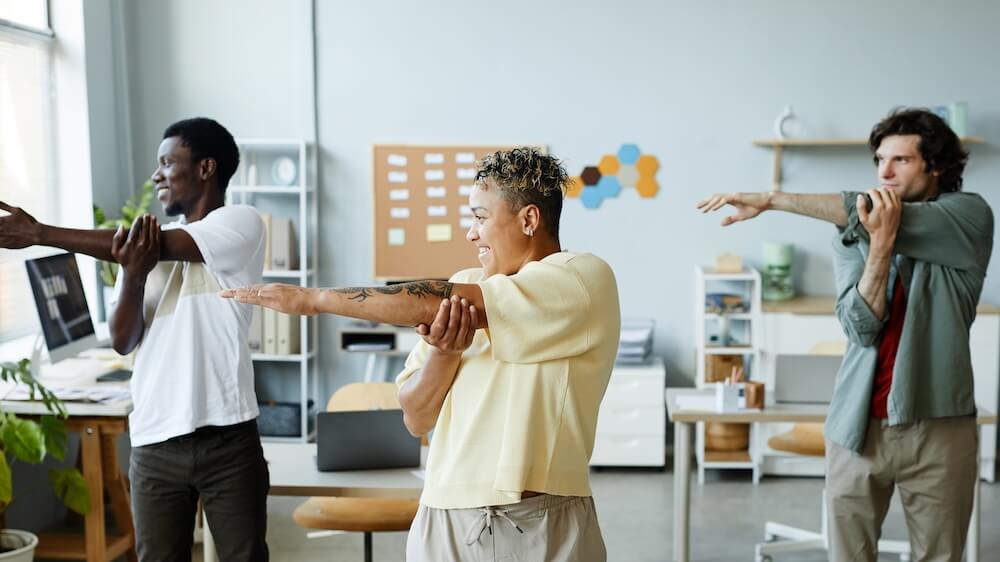
Synchronous movement has such a potent effect on us that it can help flip the switch that orients us toward thinking of ourselves as part of a group, according to writer Annie Paul. Photo: Adobe Stock
One afternoon, as bored 13-year-olds wandering around a local mall, my friends and I entertained ourselves by sitting in the lounge of a department store restroom, all staring at the same corner of the room. Invariably, whoever entered the restroom would immediately look up at it, too. We thought it was hilarious.
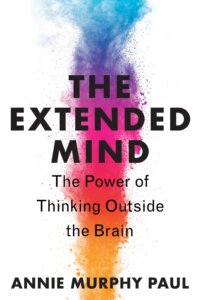
We must have been very bored, but our experiment is one that social scientists have replicated in a variety of contexts. Humans’ ability to make each other look is so powerful that scientists have hypothesized that our eyes evolved to support cooperative social interactions, wrote science journalist Annie Murphy Paul in The Extended Mind: The Power of Thinking Outside the Brain. The capacity to share attention — and to be aware that we share it — has given humans an “unequalled capacity for coordinating thought and behavior with other members of their species,” Paul writes.
What we can do with our combined attention gets a big boost when we are not just looking in the same direction but think of ourselves as members of a group, she adds. Experiencing ourselves as a collective “we” changes how we direct our focus and where we put our energy — “in a sense, it is what makes all human achievement possible.”
Among the most powerful ways to build the sense of “we” is by providing opportunities for people to move and feel together, according to Paul. Sharing emotions, including when people express their feelings candidly, creates a kind of social glue, according to Paul. And when we move our bodies in sync with one another, that can heighten our awareness of being in a group, she writes. On an emotional level, synchrony has the effect of “making others, even strangers, seem a bit like friends and family.”
Synchronous movement has such a potent effect on us that it can help flip the switch that orients us toward thinking of ourselves as part of a group, Paul writes. Rituals also increase the feeling of belonging to a group and can be especially powerful when they combine movement and emotion, she added.
 Subscribe to Convene.
Want deep-dive insights on events delivered to your inbox? Sign up for our newsletters
“Rituals are not soft activities,” José Luis Piñeiro, design executive officer at HD* Human Design Doing, a Mexico City-based organizational development and consulting hub, told Digital Media Editor Magdalina Atanassova on the Convene Podcast. “They are infrastructure for human behavior,” said Piñeiro, who was a keynote speaker at Convening LATAM in May. “Most companies still think events are communication tools” but events shape things including what people celebrate, what they repeat to one another, and what people remember, Piñeiro added. “Events are actually behavioral architecture.”
Barbara Palmer is Convene’s deputy editor