 Log In

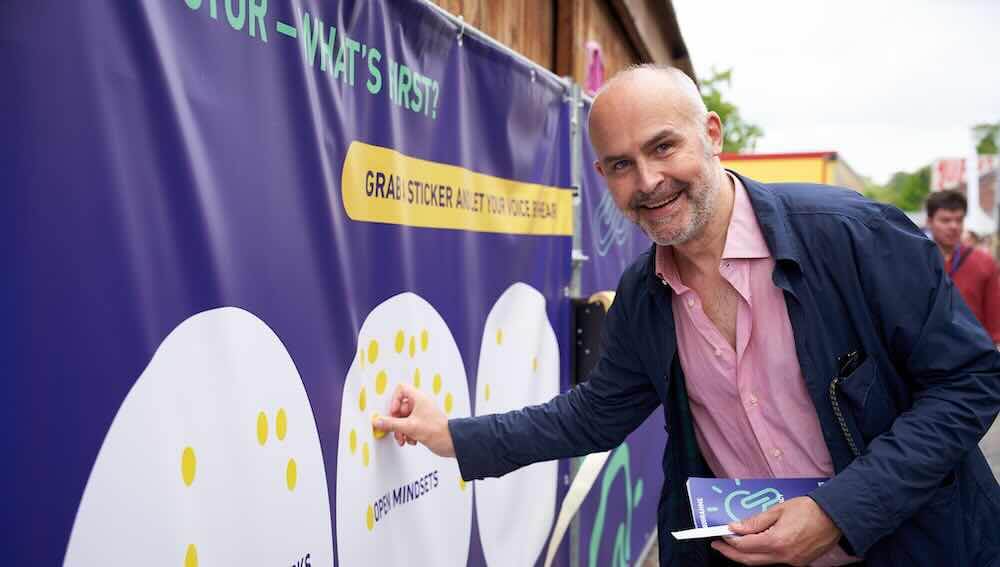
Attendees at the latest Creative Bureaucracy Festival in Berlin moving between stages outdoors had to pass through a passageway lined by fences that kept a messy construction area out of view.
One data point from this year’s Salary Survey that we didn’t explore further in our analysis is a persistent gender pay disparity. Women make about 89 percent of men’s average salary, around $15,500 less per year, according to our results. Yet despite earning higher salaries, male respondents were no more pleased with their salaries on average than everyone else who participated in this year’s survey.
The fact that men are historically underrepresented in our surveys — this year, only one out of 10 respondents were men — is something to take into account when considering the data. In addition, the difference in pay between men and women this year is more than double the 5-percent gap in last year’s Salary Survey, underscoring that the results are determined by a small pool of males who participate, which varies from year to year.
Whatever stock you put in our gender pay gap analysis, events professionals seem to be doing somewhat better than the overall workforce. According to the most recent Pew Research Center analysis, women earned an average of 85 percent of what men earned, and U.S. Census Bureau data indicates they earned only 81 percent of their male counterparts’ salaries in 2024.

Michelle Russell
Editor in Chief
Experts offer a variety of reasons why the gender pay gap hasn’t narrowed very much in 20 years, citing personal factors such as women making different career choices about how to balance work and family, and more systemic issues like employers’ treatment of women. A research report released by the PCMA Foundation and Business Events Sydney last year revealed a disparity in leadership roles in the events industry that draws a direct line to the pay gap: Women make up approximately 70 percent of the global business event workforce but only fill 20 percent of the C-suite roles.
There’s no question that we need to address and correct salary and career advancement constraints for women in the events industry and beyond. Elsewhere in this issue, however, we explore how constraints can be positive.
Many studies have demonstrated that constraints can foster creativity. One reason: It’s easier to ideate within boundaries — having limitless options can be overwhelming. Panelists on a PCMA Institute webinar earlier this year, for example, touched on how budget constraints can be used as opportunities to rethink the way things have always been done and to eliminate what doesn’t add value or meaning.
And while we’ve seen evidence of the current U.S. administration policies constraining the growth of scientific conferences, as our lead story in Plenary reveals, organizers are creating strategies to counter these downward forces. They include introducing online and hybrid options and exploring new audiences — for reasons beyond their own bottom lines. “At a time when the world needs big breakthroughs,” said Biotechnology Innovation Organization (BIO) President & CEO John F. Crowley about the organization’s conference, given the current environment, we need to be “poised to meet the moment.”
Walls Into Windows
One more example of positive constraints from this issue: When I spoke with Johanna Sieben for our Innovative Meetings series, she shared how she and her team turned a bothersome element into an enriching, no-tech feature at this year’s Creative Bureaucracy Festival in Berlin.
The team hung large signs with polling questions along fences lining outdoor walkways on the event campus that served to block views of a construction site. Participants indicated their thoughts about different professional issues with sticky notes. The fences became popular places to engage and connect with others — enhancing rather than detracting from the attendee experience.
Michelle Russell is editor in chief of Convene.