 Log In

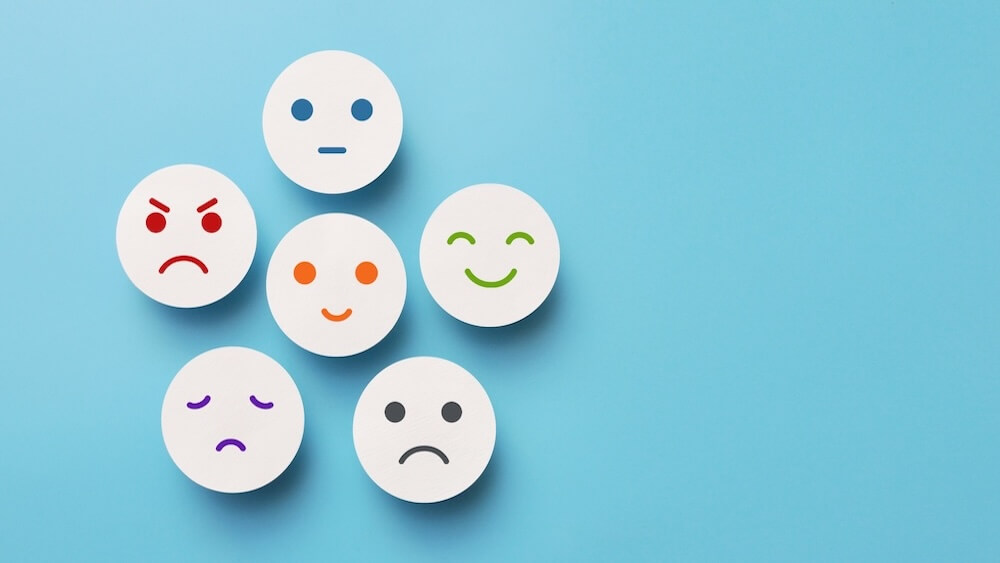
There was a wide variety of sentiments expressed by respondents to Convene‘s latest Meetings Market Survey.
When we fed our Meetings Market Survey data to gen AI, it characterized respondents’ overall sentiment as one of “anxious resilience.” That seems an appropriate response to the uncertain environment we have found ourselves in over this past year — on-again, off-again tariffs, DEI and climate change backlash, major geopolitical shifts, cuts to government funding and staffing, and rising prices of goods and services, to name a few challenges.

Michelle Russell
Editor in Chief
One of the questions we ask of planner survey takers that helps us take the temperature of our industry is whether they are more worried or excited about the future. This year, similar to last year’s survey results, around half of respondents described themselves as feeling both things.
But nearly three times as many respondents said they were more worried than excited compared to last year’s results — 31 percent vs. 11 percent. We put the same question to a curated group of business event professionals around the globe, and while many cited concerns about what the coming year may bring in the way of continued or new challenges, their overall mood was upbeat.
Which got me thinking about the role optimism — and pessimism — may play in cultivating resilience. The American Psychological Association defines resilience as adapting well in the face of adversity, not denying hardship. It is less about bouncing back quickly — although we can say that face-to-face meetings quickly rebounded after COVID as we were making up for lost time — and more about sustaining forward progress.
And while being optimistic is understood as a positive trait, “extreme optimism might not always be a good thing,” Aleea Devitt, a psychologist at New Zealand’s University of Waikato, said in a recent Scientific American story, because it may prevent us from planning for the future “as well as we should.” Devitt has found that “pessimism may be a useful, ‘positive’ trait in some situations; there’s evidence that some people can be defensive pessimists, which can actually help them better prepare for the future.”
Optimism also can be seen to be more of a moment-to-moment or situational experience, not a fixed trait — meaning there are ways to boost it. And that’s where events come in: New evidence cited in the National Library of Medicine indicates that strong social connections — the backbone of events — contribute to an optimistic outlook.
“Optimistic people tend to converge on a few shared mental models of a hopeful future,” said Elisa Baek, a University of Southern California social neuroscientist, in the Scientific American article. Several studies taken together, she said, “may point to a more general principle — that being ‘on the same page’ as others is a foundational mechanism that underlies the experience of social connection.”
It may be a chicken/egg question: Are optimists more likely to seek out meaningful connections at events or do gatherings of like-minded people cultivate collective optimism? I say both.
Hopeful Thinking
Resilience also can be thought of as “grounded hope” — combining optimism with realism and defensive pessimism when needed, as in, “If this goes wrong, I’ll have a plan” — what event organizers
do best.
In a new book I’m reading, Hope Is the Strategy: The Underrated Skill That Transforms Work, Leadership, and Wellbeing, author Jen Fisher says she discovered “that hope isn’t passive optimism — it’s an active force for change. It’s not about wishing things were different — it’s about believing they can be different and having the courage to move toward that possibility.”
The book has received praise from bestselling author Adam Grant, a Convening Leaders 2026 Main Stage speaker, who said it “is full of actionable ideas for … restoring energy and building hope” — what events do best.
Michelle Russell is editor in chief of Convene.