 Log In

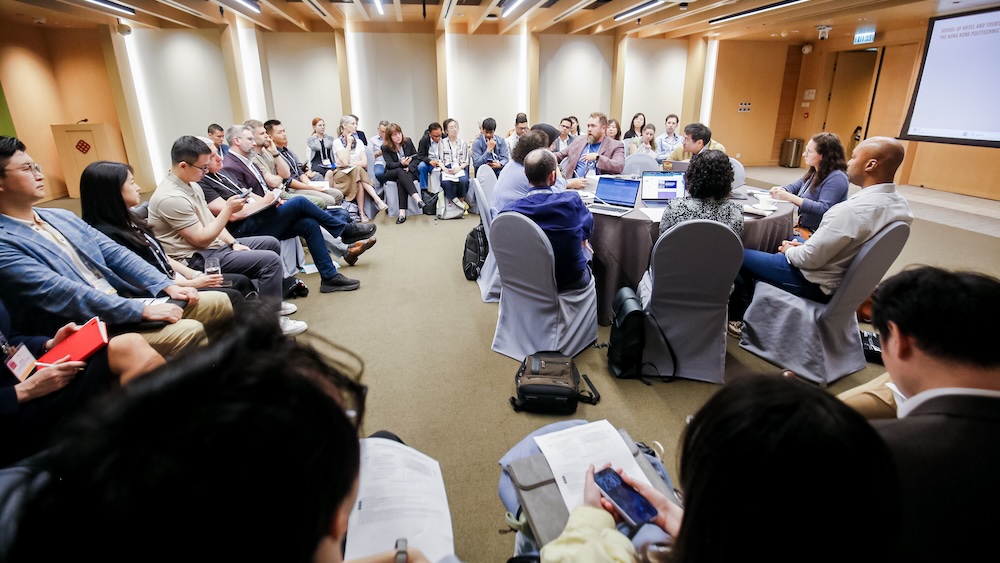
Participant feedback and interaction are woven into every element of the Strategic Management Society’s annual global conference.
The Strategic Management Society (SMS) has a head start when it comes to building interactive sessions into its annual global conference and other events. The society was founded in London in 1981 to bring strategic management practitioners — think business strategy consultants and corporate executives — and scholars together to speed up the adoption of the field’s cutting-edge research into the world.

Anna Allen
That means that finding ways to maximize the exchange of ideas at the Society’s annual global conference and other events tends to be the default mode rather than the exception, said Anna Allen, SMS’s director of membership and events, who oversees events for the 3,000-member society, which represents more than 1,100 institutions across more than 70 countries.
The majority of the global conference participants are academics, including faculty researchers, professors, and Ph.D. students, and the remaining attendees — about 20 percent — are practitioners, Allen said. “Everyone who attends our conference is an expert,” Allen said. That includes, she added, many of the field’s biggest names — “they are the heavy hitters, the stars, and everyone is always excited to hear a keynote from them,” Allen said. But overall, “it’s better to have more dialogue or more interactive formats, so that the experts can debate their viewpoints and share their different areas of research expertise.”
There are no poster sessions at the conference. Technically, all of the academic research submitted to the conference is a work in progress, Allen said, “because our call for proposals is for unpublished research.” There are traditional sessions where solo participants present research, but there also are dozens of more collaborative research sessions organized under a format SMS calls a “Common Ground Session.”
At those sessions, the accepted proposals are grouped by theme, and their authors, four or five at a time, sit at a round table, in the center of a room, with a topic expert who facilitates discussion. The audience is seated in a larger circle around them. Individual presentations are kept short — researchers have just three minutes each to discuss a few key points, she said, “and then everything else is discussion.”
The facilitator’s role is to find the common threads in the proposals and generate group feedback, Allen said. Facilitators “usually are experts themselves, so they might present their own feedback, and then all the audience members who are wrapped around the room can just jump in and give feedback.”
There can be a lot of different types of conversations going on, she added — between the facilitator and the presenters, two presenters might start exchanging ideas, or there may be discussion between audience members. “The facilitators are people who’ve been in our membership community for a long time, and they might even see someone in the audience and call on them,” Allen said. “We just try to have a really robust discussion.”
 Subscribe to Convene.
Want deep-dive insights on events delivered to your inbox? Sign up for our newsletters
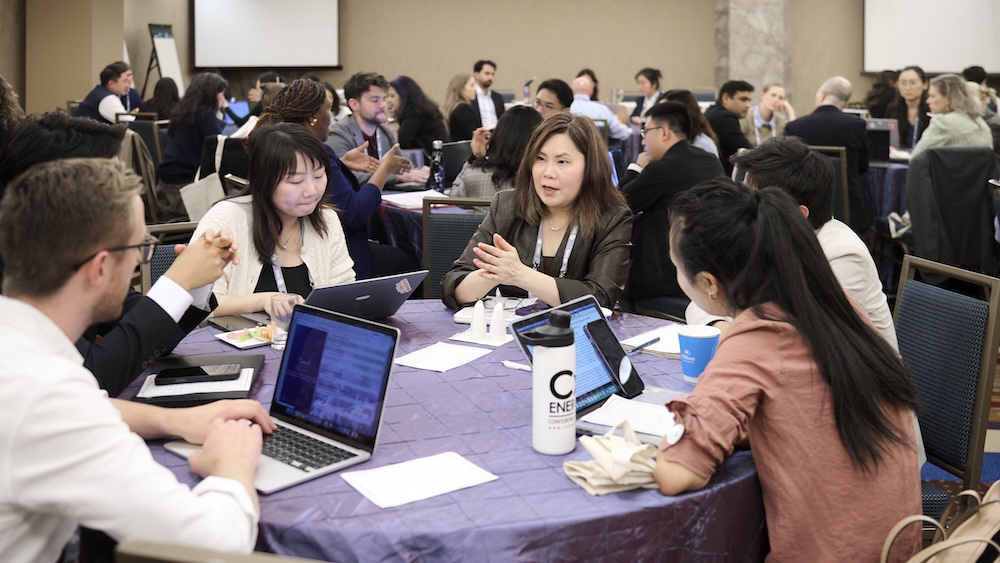
‘Everyone who attends our conference is an expert … it’s better to have more dialogue or more interactive formats, so that the experts can debate their viewpoints and share their different areas of research expertise,’ Anna Allen told Convene.
Workshopping Collaboration
When Allen began working at SMS in 2019, one of the most hands-on parts of the conference program was a series of Saturday workshops that were presented to attendees as a pre-conference option. “I think [the workshops] are so powerful and have such strong attendee value that I wanted people to think of them as part of the conference — that this is what you do on the first day,” she said.
The workshop formats she inherited with her job included application-based paper development sessions, where researchers got small-group feedback, and professional development topics. Allen has developed the offerings, including adding emerging topics like AI, with the goal that half won’t require participants to apply in advance. The walk-in workshops always “have some sort of breakout group discussion and hands-on collaborative component, so that participants can just show up and get a lot out of them,” she said. Since the changes, Saturday attendance has grown so much that she has run into challenges with there not being enough hotel rooms in the blocks that were negotiated far in advance, Allen said.
A Buddy to Hang With
SMS has found more informal ways to connect conference participants around shared interests, including at daily lunches served at the conference venue, usually in a hotel ballroom. There are unassigned seats, but the Society’s many special interest groups and communities host tables, placing signs on the tables to make them easy to identify, Allen said.
The main lunchroom is a sea of tables, and SMS has added another layer that goes even further to help people meet each other, she said. Each day, a different hosted networking lunch is held in a separate, smaller area for groups including a lunch where Ph.D. students can get together, a longstanding women’s networking lunch, open to everyone, and a lunch for first-time attendees. The hosted networking lunches were something implemented post-pandemic, Allen said, “when we realized people are just starved for that in-person interaction. They had lost that connection.”
SMS also holds unstructured networking receptions every evening, Allen said. “That’s one of the reasons why we do have the lunches — so that people can meet each other before they then go into these larger receptions. And hopefully, they will have met a buddy that they can hang out with.”
Breaking Out, Reimagined
Familiar formats such as lectures and panels are valued by meeting attendees — but for most, interaction is what makes events feel like immersive experiences.
The panel-with-moderator format is ubiquitous at events. But according to Freeman’s 2026 Learning Trends Report, when attendees are asked to rank the kinds of education session formats they prefer, panels came in last, chosen by 17 percent.
The leading format, chosen by 24 percent of attendees surveyed, was a lecture, followed closely by hands-on or participatory interaction, at 22 percent, and facilitated workshops and roundtables with other attendees, chosen by 19 percent of respondents.
When attendees were asked to select up to three environments that most positively influence their learning experience, the top three responses overall were hands-on interaction or participatory sessions, selected by 55 percent; lecture-based, topic-specific education sessions, 40 percent; and peer-to-peer learning opportunities, by 35 percent.
It seems like a contradiction, but from his own experience as a speaker and event designer, it is not a question of either lectures or interactive content, but “both/and,” Ken Holsinger, Freeman’s senior vice president of industry research and insight, told Convene. “I think the balance that I’ve seen is that people still want an expert. It’s maybe talk for a few minutes and then we will interact.”
“Immersive” has become a synonym for engaging in the events industry and creating them has become a kind of holy grail for many event organizers. It’s useful to know, then, that more than six in 10 attendees define immersive experiences as hands-on interaction, according to the Freeman Trends Report, “Unpacking XLNC: Bringing the X Factor to Attendee Experiences.” “Immersive experiences don’t require breaking the bank for multisensory, high-tech elements,” the report said. “They just require thought and creativity.”
Barbara Palmer is Convene’s deputy editor
 Meetings, Made Personal
This article and those listed below are part of Convene’s August 2026 issue cover and CMP Series story package.