Log In


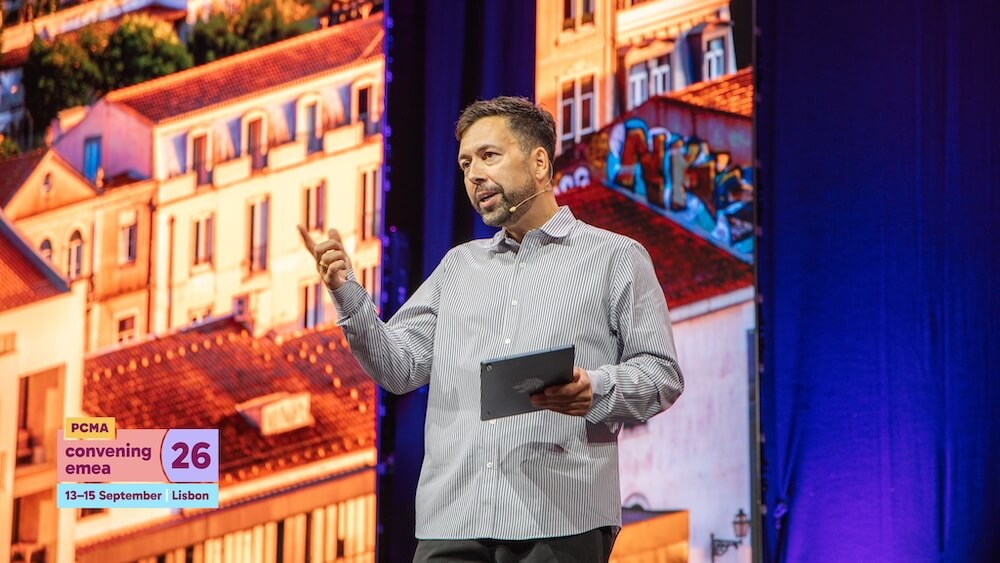
“In the past, I think we’ve often looked at connection as kind of a byproduct of a good event, a nice to have. Now we know better. We know that connection is not a byproduct. It must be the outcome.” — Felix Rundel, CEO for the Centre for Convening Minds, speaking at Convening EMEA in Lisbon, Portugal
Lenny Rachitsky, a former tech executive, created Lenny’s Newsletter — a weekly advice column published on Substack about product growth and career advancement — in 2019 after leaving Airbnb. Within five years, the newsletter had reached 1 million subscribers.
In 2024, Rachitsky used his online audience as a launching pad for the invite-only Lenny and Friends Summit, which when held for the second time this September brought more than 1,000 people from around the world to San Francisco for a one-day product-management conference.
Rachitsky keeps the event intentionally small and handpicks every attendee, he wrote in a LinkedIn post about the September 2026 event. Alongside “in-depth talks from the world’s top operators,” Rachitsky promised interactive workshops and “tons of opportunities to get to know other attendees.”
“There’s such power in IRL events, especially these days, and especially for product leaders, who often lack peers they can be real with,” he added.
It was difficult for him to put his finger on exactly what the secret ingredient was at the Summit, Columbus Leonard, an engineering and product leadership consultant from San Francisco who attended the event, wrote on LinkedIn. “But I don’t know if I have ever been around such a diverse group of leaders who are so open to discussing what is working and what they are still experimenting with in their organizations,” Leonard added.
The prominence of curated networking and interactive learning at events such as the Lenny and Friends Summit represents a key shift in priorities. For one-third of corporate planners, engagement is now the top KPI for their organizations’ leadership, according to the PCMA 2026 Outlook Report. The most successful new event formats “cluster around networking and community, interactive design, and experience,” the report said.
“When people can already find information and connect with peers online, what becomes more valuable when they meet in person?” asks PCMA’s “Information and Communications Technology” sector report. The evidence, the report said, “points toward access to the right people, practical learning, trusted discussion, and opportunities to solve problems together.”
It’s a trend that surfaces throughout healthcare and financial services events as well as PCMA Insights’ sector reports. In healthcare, “events are shifting from information platforms to community-led ecosystems, and from passive content to curated, interactive formats. In the financial services events, “the most valuable content for senior leaders often happens in small-group, high-trust environments rather than large plenaries.”
That doesn’t mean that attendees are necessarily looking for smaller events, Ken Holsinger, Freeman’s executive vice president for research and insights, told Convene. Larger events can offer attendees access to more ideas and opportunities, he said.
“The question is how to create a more personalized experience for communities within larger ones,” he added. “How do I break the large experience down into something personal?”
 Subscribe to Convene.
Want deep-dive insights on events delivered to your inbox? Sign up for our newsletters
Community Building
The emphasis on personal interaction converges with what Forbes called the hottest trend of the year: community building. A combination of remote work, the isolating effects of social media, and the fact that nearly 67 percent of American adults feel lonely because they are not part of meaningful groups is fueling a rise in IRL groups, Olivia Shalhoup wrote in “Community as the New Currency” in Forbes. Since 2025, there’s been a 59 percent increase in running clubs, she wrote, and nearly 60 percent of respondents said they made new friends in such groups.
And making new friends, it turns out, is a KPI for at least one conference: Nine out of 10 attendees at the 2025 CancerCon, an event organized annually by the nonprofit Stupid Cancer for adolescents and young adults, said they made a new friend while 38 percent reported making four or more new friends.
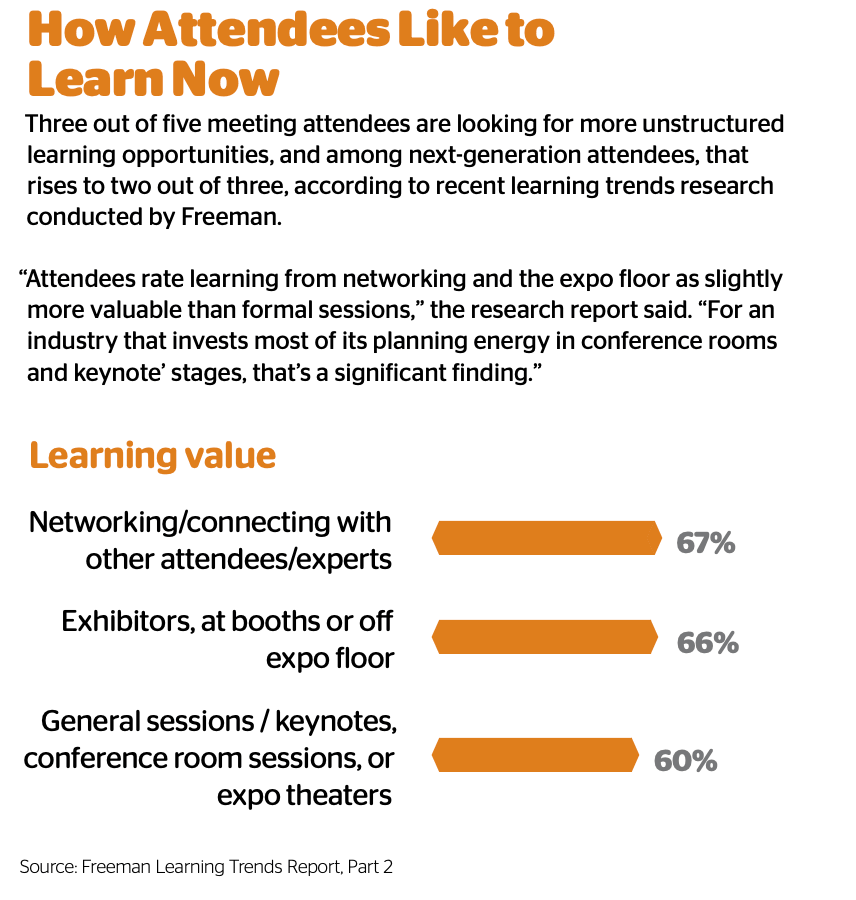
How Attendees Like to Learn Now
Three out of five meeting attendees are looking for more unstructured learning opportunities, and among next-generation attendees, that rises to two out of three, according to recent learning trends research conducted by Freeman.
“Attendees rate learning from networking and the expo floor as slightly more valuable than formal sessions,” the research report said. “For an industry that invests most of its planning energy in conference rooms and keynote’ stages, that’s a significant finding.”
 The Speaker of the Future
Tomorrow’s speakers will not be selected solely on the basis of fame or follower numbers. What matters is genuine expertise, credibility, stage presence, and the ability to transform knowledge into a relevant experience.
“The demand is no longer for interchangeable presentations, but for personalities who provide orientation, spark discussion and connect their topics to the audience’s reality,” stated “The Events Industry in 2027” by Expert Marketplace. “The traditional stage appearance is increasingly becoming part of a broader impact journey: preparation, keynote, interaction, deeper engagement, content, and measurable transfer.”
Source: “The Events Industry in 2027,” Expert Marketplace
Barbara Palmer is Convene’s deputy editor