Log In


About the PCMA Global Student Competition
The PCMA Global Student Competition invites student teams from around the world to solve real-world challenges in the business events industry. Each year, participants develop creative, strategic proposals in response to a timely case study, then pitch their ideas to a panel of industry leaders. It’s a one-of-a-kind opportunity to showcase your talent, build your network, and make your mark on the future of events.
For questions or more information, please contact [email protected].
Registration is open — sign up your team by October 19 to secure your spot.
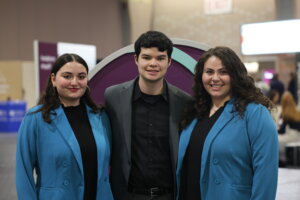
2025 Competition Winners & Finalists
2026 Competition Brief
Theme: The Workforce Remix — Designing Business Events That Drive Value Across Generations
Business events have always brought together people at different points in their careers. What’s changed is how much that mix matters – and how much opportunity it creates.
Early-career professionals come to events looking for connections, visibility, and a way into the industry. Experienced leaders come for peer exchange, strategic conversations, and the chance to shape what comes next. Most events treat these as separate needs. The best ones don’t.
Your challenge is to design a business event for the PCMA community that genuinely works for both groups – not by splitting the difference, but by building an experience where different career stages make the event better for everyone.
We’re looking for proposals that are both creative and executable. That means we want to see original ideas – new formats, unexpected approaches, programming that hasn’t been done before – but also a clear sense of how those ideas would actually work in practice. The best proposals will be ones that PCMA could realistically bring to life. In fact, strong concepts from this competition have the potential to directly inform how PCMA designs future events.
Your proposal should answer:
- Who are your attendees, and what does each group need from this experience?
- How does your event create real two-way exchange – not just time on the agenda for networking, or traditional mentorship programs?
- How does the programming help people grow professionally, not just attend sessions?
- What would success look like, and how would you measure it?
A strong proposal will be:
- Original: Bring a fresh perspective. Don’t default to the obvious formats.
- Clear: Your concept should be easy to follow. Show you understand the problem before you propose a solution.
- Realistic: Your ideas should be ambitious but executable. If it couldn’t actually happen, it won’t score well.
- Intentional: Every programming and design choice should connect back to your goals. Explain your thinking.
Submission Details & Requirements
Your proposal should address both the theoretical and operational sides of your event — meaning we want to understand why you made the choices you did and how those choices would work in practice. A great concept without any sense of execution isn’t enough, and a well-organized plan without original thinking won’t win either.
These sections and page lengths are a guide, not a strict requirement. Adapt as needed — just make sure your proposal is complete and easy to follow.
- Executive Summary (1 page) — A concise overview of your event: what it is, who it’s for, and what makes it worth building.
- Introduction (1 page) — What problem are you solving and why does it matter? Set up the challenge clearly before getting to your answer. Don’t skip this — judges want to see that you understand the “why” before you get to the “what.”
- Event Concept (3 pages) — Describe your event in full. What is it, who is it for, what makes it different, and how would it be funded? This is where you make the case for your idea. Be specific — vague concepts don’t score well.
- Landscape & Audience Insights (2–3 pages; may be placed in appendices) — Start with your attendees. Who are they, what do they actually want from a professional event, and how do those needs differ across career stages? Use real research to back up your thinking — broad generalizations about generations (“Gen Z wants X, Boomers want Y”) are not sufficient and will score lower. Then use what you’ve learned about the event landscape to show where the gap is: what events already exist, what they’re missing, and why yours fills that space.
- Program Design (4 pages) — This is the most important section of your proposal. Walk us through what actually happens at your event. What are your session formats? How does networking work? What specific choices did you make to serve both early-career and experienced professionals — and why? Show your thinking, not just your schedule.
- Event Logistics (3 pages) — Cover your venue considerations, event flow, and any technology you’d use. Focus on explaining why you made the choices you did.
- Impact & Evaluation (1 page) — What does success look like for this event? How would you measure it? Make the case for why this event matters — to your attendees and to the industry.
- References & Appendices (up to 5 pages) — Sources, interviews, AI tools used, and any supporting materials.
Total: 15–20 pages of core content + appendices. Maximum 25 pages of core content.
- Maximum 25 pages total, not counting references or appendices
- Submit as a PDF
- Use a readable 10–12 pt font
- Final pitches should be recorded via Zoom or Teams with supporting slides
- APA formatting for references
- Your proposal should look professional — clean layout, visuals where helpful, consistent formatting throughout
PCMA recognizes AI tools as part of how students work today. To keep the competition fair and ensure submissions reflect each team’s original thinking, the following rules apply to every entry.
Permitted Uses
- Visuals. AI-generated images, renderings, mood boards, and graphics are allowed. All AI-generated visuals must be cited (tool name + brief description of prompt or use).
- Mock schedules and sample programming. AI is permitted for generating sample agendas, session block layouts, and programming mock-ups that teams then build on.
- Grammar and editing. AI grammar and copy-editing tools are permitted on all written content.
- PCMA Spark*. Teams are encouraged to use PCMA’s AI program, Spark, particularly for brainstorming timelines, programming, and session formats. Spark is purpose-built for the business events industry and is a great starting point for industry-grounded ideas.
- *A complimentary subscription to Spark will be sent out in your confirmation email after your team registers.
- Refining – not generating. AI may be used to refine and polish ideas, but the
underlying ideas must originate with the team. Judges want to see original student thinking; AI is a tool for sharpening that thinking, not producing it.
Not Permitted
- Generative AI for narrative content. Any narrative section (concept framing, audience analysis, experience design write-ups, etc.) must be original student writing. AI may be used only for grammar and editing on these sections, not to generate them.
- Academic writing. Background research, citations, and analytical writing must be student-authored.
- Submissions that are not original. AI cannot substitute for the team’s own design and reasoning.
Citation and Threshold
- Cite everything. All AI-generated content must be cited, including visuals, mock layouts, and any text where AI played a role beyond grammar and editing.
- 15% threshold. No more than 15% of a submission may be AI-assisted in total. Teams should be prepared to identify AI-assisted elements if asked.
Proposals are evaluated on five criteria. Point values reflect how much each area is weighted — read these carefully before you start writing.
Written Proposal — 100 points total
Innovation & Creativity — 25 points We’re looking for original ideas and unexpected approaches. Did you bring something new to the table, or did you default to formats that already exist? Safe, predictable proposals will score lower here regardless of how well they’re executed.
Program & Experience Design — 25 points How well does your programming actually serve both audience groups? Are your session formats, networking structures, and engagement choices specific and well-reasoned? This isn’t about having a full schedule — it’s about showing that your design choices were intentional and grounded in your audience research.
Concept & Problem Framing — 20 points Does the proposal start with a clear understanding of the problem? Is the event concept well-defined and specific? Judges should be able to read your introduction and event concept and immediately understand what you’re building and why.
Audience Understanding — 20 points Did you do the research? Do you actually understand what early-career professionals and experienced leaders want from events — and can you back that up? Proposals that rely on broad generational stereotypes instead of specific, researched insights will score lower here.
Feasibility & Impact — 10 points Could this event actually happen? Is there a clear sense of how it would be funded and what success looks like? You don’t need a detailed budget — but judges should come away believing this event is executable and that you’ve thought about what it would take to pull it off.
Written Proposal Total: 100 points
Finalist Pitch & Q&A — 25 points (Applies to finalist teams only)
Five finalist teams will be selected to present their proposals to the judging panel. The pitch is your opportunity to bring your written proposal to life and show that you can speak to your decisions with confidence.
Presentation — 15 points Is your concept communicated clearly and concisely within the 5–6 minute window? Does the presentation reflect the quality and depth of your written proposal?
Q&A — 10 points Can you answer follow-up questions with specificity? Judges will probe your design choices, your audience research, and your feasibility assumptions. Strong teams will know their proposal inside and out.
Finalist Pitch Total: 25 points
Maximum total score: 125 points
Five finalist teams will be selected by the Competition Committee following an initial proposal review.
Finalists will submit a 5-minute recorded pitch with supporting slides, followed by a live 10–15 minute Q&A with the judging panel via Microsoft Teams. Finalist presentation dates will be announced in advance.
- All participants must be currently enrolled undergraduate or master’s students in meetings/events management, business, hospitality, tourism, or a related field
- Teams must have 3–5 members; students from different academic levels may be on the same team
- Each student may only participate on one team
- Teams must register and receive an official PCMA-issued team name before submitting
- All team members must be PCMA student members — membership is free. Learn more here.
- Complimentary round-trip airfare (up to $500 USD per person), hotel, and registration for Convening Leaders 2027
- Opportunity to present your winning concept live at Convening Leaders, during a concurrent session
- Hands-on collaboration with the PCMA team to bring elements of your concept to life at a future PCMA event
- Exposure to 5,000+ global event professionals and industry leaders
Resources
General Resources:
- Comprehensive Industry Glossary
- Judging Rubric
- PPT Sample Template (for finalist teams only) – for structure only, design and layout should be unique
- PCMA’s AI Tool: Spark – integrating generative AI as a resource tool is encouraged and should be referenced when used
Suggested Learning Resources
The following resources are provided to help you build your proposal. You are not required to use them, but they offer useful context for the research and thinking this competition asks you to do.
Understanding the Multigenerational Workforce
-
iHire: Inside the Multi-Generational Workforce (2025) A survey of more than 1,600 U.S. workers across four generations, covering career motivations, workplace expectations, and what each generation wants from professional environments. A useful starting point for your audience research. Read the report →
-
World Economic Forum: Gen Z Is Driving Change in the Multigenerational Workforce (2025) An accessible overview of how generational values are reshaping professional expectations — and what that means for organizations trying to serve people at different career stages at once. Good context for framing the problem your event is trying to solve. Read the article →
-
Korn Ferry: Building a Multigenerational Workforce — What Job Seekers Want (2025) Breaks down what each generation prioritizes when evaluating professional opportunities — from career advancement to flexibility to peer connection. Directly relevant to your Landscape & Audience Insights section. Read the article →
Designing for People
- Freeman: Event Organizer Trends Report — How Gen Z & Millennials Are Shaping the Future of Events (2024) Research from one of the largest event companies in the world on how generational shifts are changing what attendees expect from events. Key findings include data on the gap between how organizers design events and what younger attendees actually want — including preferences for hands-on learning, immersive experiences, and meaningful connection over passive content. Useful for both your audience research and your program design choices. Download the report →
-
Convene: Bridging the Generation Gap at Events Real examples of how organizations are designing intergenerational programming at conferences — including session formats that bring early-career and senior professionals together for structured, candid exchange. Useful for thinking through your program design choices. Read the article →
-
Convene: Gen Z Wants to Attend Events — Why Aren’t They? Covers the specific barriers that keep early-career professionals away from industry events, and how some organizations are designing around those barriers. Relevant to both your audience research and your thinking about access and value. Read the article →
-
Convene: How to Engage Next-Gen Members A practical look at how associations are building programming for early-career attendees — before, during, and after events. Good grounding for your program design section. Read the article →
-
Convene: In the Age of Endless Content, People Choose Connection Explores why people still show up to events when everything is available online — and what that means for how we design them. Good framing for the “why does this event need to exist” argument in your proposal. Read the article →
-
Convene: ‘The Radical Act’ of Creating Community A look at what it actually takes to build genuine connection at events — not just put people in the same room. Relevant to any proposal focused on meaningful exchange across career stages. Read the article →
-
Convene: Building Events for Belonging Explores how event design choices — programming, space, structure — can make attendees feel like they belong rather than just attending. Directly applicable to designing for a mixed-career-stage audience. Read the article →
-
Guiding Principles in Experience Design — Six Truths for Innovative Event Strategies An industry research series identifying the behaviors and motivations shaping experience design today, developed in partnership between PCMA and Marriott International. Useful for grounding your program design choices in what we know about how people engage at events. Read the research →
Past Winners & Proposals
2025: Johnson & Wales (Proposal)
2024: Singapore Polytechnic (Proposal)
2023: High Point University (Proposal)
2022: George Washington University & ISAE Universidad (Proposal)
2021: Durham College
2020: University of Florida
2019: California Polytechnic State University
2018: Kansas State University
Powered By