 Log In

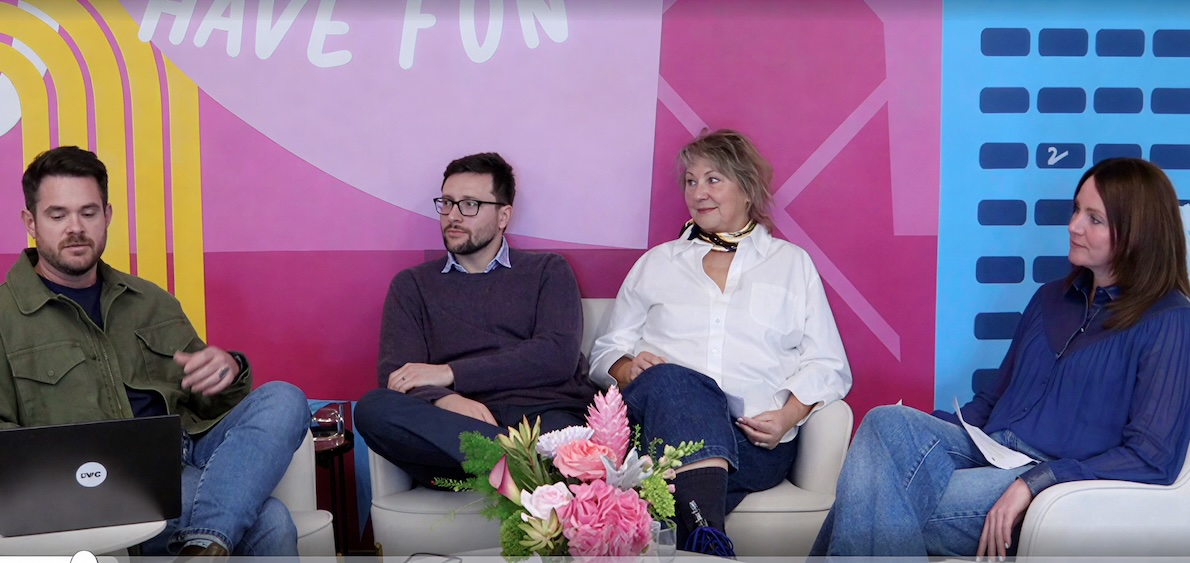
Invision’s Evan Strange, Sam Rudelich, Michelle Bartosiewicz, and Eileen Page unpacked the agency’s annual report in a LinkedIn webinar.
Several years ago, experiential marketing agency Invision launched a research and insights practice “to stay on top of shifting trends and consumer insights” that help fuel brand experiences — including at events. The agency’s recently published annual report “Business of Experiential ’26: Designing for Trust” offers learnings based on a survey of 1,000-plus U.S.-based B2B event attendees who had taken some kind of action — from talking about their experience on social media to purchasing a product — after attending a B2B event.
Invision recently hosted a LinkedIn webinar with four team members to sift through the report’s five main takeaways. The webinar was facilitated by Evan Strange, senior strategy director, and included Sam Rudelich, research & insights project manager; Michelle Bartosiewicz, senior creative director; and Eileen Page, SVP of digital and innovation.
Before surveying the attendees themselves, Invision spoke with experiential marketers to learn what they were most interested in learning from a broad swath of attendees, from the role personalization plays in driving action to what makes keynotes stand out, Strange said. Once the survey responses were in, “we spent some time segmenting the data and we looked at differences across generations as well as job titles to see if it was the same things or different things that moved audiences to action,” he said. He then took the webinar viewers through the key takeaways from the data.
Key Learning No. 1: Trust is what moves audiences — and you can design for it.
As you may have assumed from the title of the report, “trust in the brand is the No. 1 thing that drives attendees to take a meaningful action after attending the event,” Rudelich said. “It’s more important than personalized experience, networking or community connections or the brand message or story.”
Rudelich noted that there are a variety of ways that brands can quickly erode trust with their audience, including unprofessional or unprepared staff or representatives, overpromising and underdelivering, lack of transparency about intentions of data use, and overly sales-driven interactions.
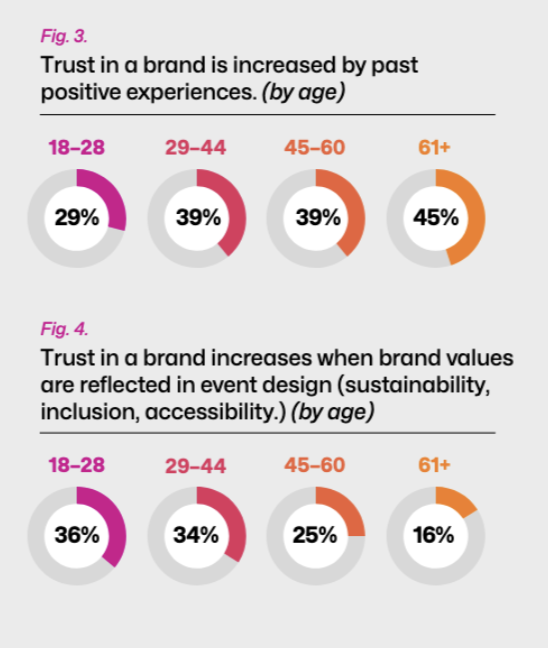 Looking at the segmented data, he said, younger audiences are a lot more moved by brands that are reflecting their values in the event design, while older attendees are a lot more driven by past positive experiences with the brand.
What drives brand trust the most? Opportunities to ask hard questions and get honest answers, followed by transparent case studies or real-world examples, Rudelich said.
One of the most surprising insights, he said, coming from the responses is that more than half of Gen Z thinks that brands should be using their event stages to reflect their values and take a stand on important issues. “That’s a far cry from boomers where almost 90 percent said the brand should focus on delivering great experiences and stay neutral on those social issues,” he said.
How do you build experiences and design them to foster trust?
Bartosiewicz emphasized that “trust is currency. You’re investing in a long-term relationship” with attendees, and building trust is more important to outcomes than any shiny new tech.
Key Learning No. 2: Personalization pays if you earn the data contract.
Effective personalization increases attendees’ likelihood to take action after an event across the board and strongest among Gen Z, Rudelich said. This includes communications that are personalized and tailored to the attendee, experiences that save them time or effort, follow-up content tailored to them, and agenda or content recommendations that match their role or needs.
The top reason attendees said they would be less likely to share personal information with event organizers is a concern about privacy and security — which ladders back up to transparency about intentions around data use being key to building trust, he said.
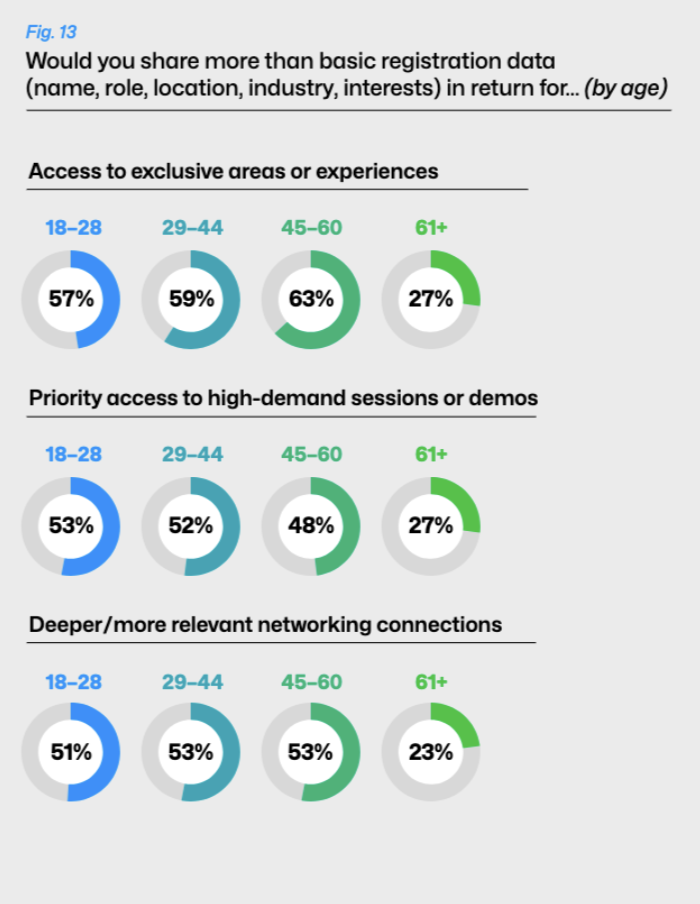
Attendees indicated that they would share personal information with an event organizer in exchange for valuable benefits, Rudelich said. Respondents to the survey said they would provide more than basic registration info in return for such things as access to exclusive areas or experiences, priority access to high-demand sessions or demos, and deeper and more relevant networking connections.
 Page said it comes down to the “three D’s”: data, design, and delivery (in terms of where your audiences are, e.g., Instagram). The best-in-breed event apps now have AI built in, she said. “It’s not just personalizing your agenda anymore, it’s pulling in your flight itinerary and tailoring your agenda based on your arrival time,” she said. It’s an app that recommends a replacement session if another gets is suddenly canceled “that is not only relevant but in close proximity.” It’s not going to be helpful to recommend a session that is a 20-minute walk away that will get your there 15 minutes late, she said.
Page added a caution about using tools like AI: Organizers “need to disclose it to their attendees,” she said. That transparency also speaks to the need to build trust.
Key Learning No. 3: Hands-on plus peer proof beats flash.
“Getting an opportunity to test the solutions or see products live in the event setting is what is going to drive action,” Rudelich said. Keynotes are lower — seventh — on the list of what drives attendees to take action. Giving attendees a chance to talk to each other about the product also goes a long way in getting attendees to take action, he said.
When you’re bringing your internal employees out to meet your key audiences at events do they have to be your most polished staff? Strange asked Bartosiewicz, who shook her head no. “In fact, when you consider that we all want to put a human-centric spin on experiences,” she said, it’s imperative to “show up as ourselves on stage. Be real. Be vulnerable. Be honest,” she said. You’re going to be that much more relatable to the audience.
Key Learning No. 4: Networking is shifting from serendipity to designed community.
Networking, Rudelich said, “is not all about the big mixer anymore.” People are looking for more intentional ways to engage with their peers. They are more interested in topic- or role-based sessions, small group roundtables or discussions. One-third of Gen Z respondents said they are interested in gamified networking activities and nearly one-quarter said that curated or facilitated introductions led them to take meaning action post-event, compared to only 14 percent of boomers, he highlighted.
Key Learning No. 5: Authenticity plus specifics win on the main stage.
Ways to make presentations more authentic include backing your message with credible data or proof points, Rudelich said, making it simple to understand, relevant to their role or challenges, and being specific about how they can apply the key learnings in their own role.
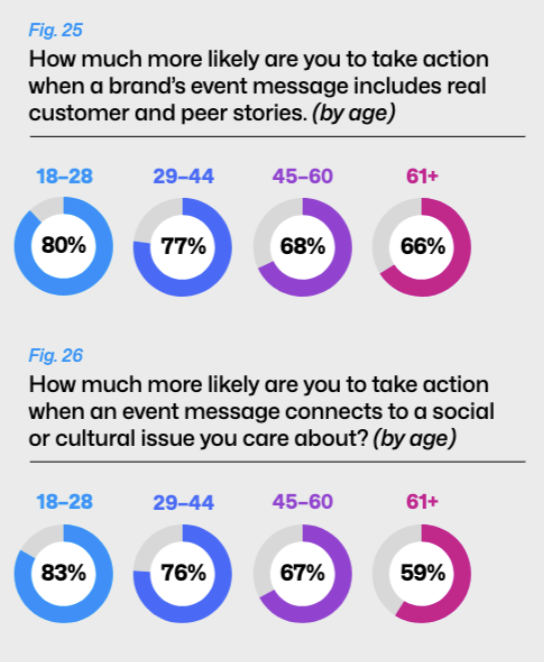 Generationally, he noted, Gen Z is a lot more receptive to a brand’s event message when it includes real customer and peer stories and is more likely to take action when an event message connects to a social or cultural issue they care about — 83 percent vs. only 59 percent of boomers. (Which also traces back to Gen Z’s expectation that brands take a stand about social issues, something boomers care less about.)
And lastly, speakers need to pay attention to the length of their presentation and how it’s delivered. Attendees tune out when it feels like the speaker is reading off a script, is overly promotional, or is long-winded — Bartosiewicz recommends keeping a talk to no more than 20 minutes and leaving plenty of time for Q&A.
Michelle Russell is editor in chief of Convene.
- Read insights from a Freeman Trends Report that looks at what attendees want from events.
- Ken Holsinger, senior vice president of industry research and insights at Freeman, told Convene what stood out to him in the most recent Freeman End-of-Year Recap.