 Log In

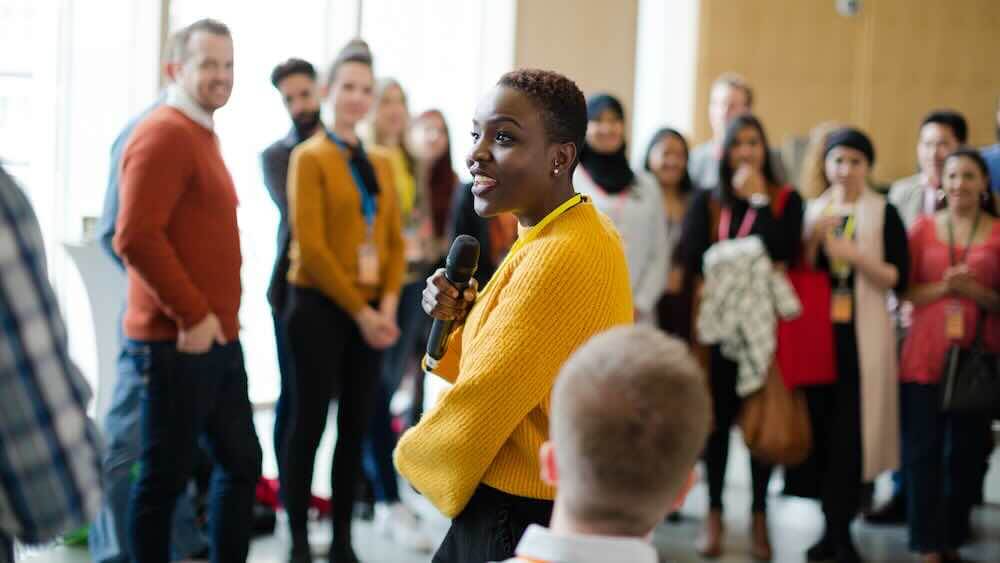
Global Business Events Week 2026 was a chance for the entire industry to come together with one voice.
On Global Meetings Industry Day 2026 in May, the Events Industry Council announced an initiative to frame business events as a “Human Catalyst for Global Growth,” highlighting our role in fostering collaboration and accelerating innovation in an increasingly complex world.
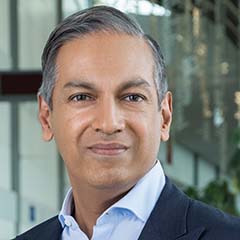
Sherrif Karamat, CAE, President and CEO, PCMA and CEMA
Fulfilling that role depends on trust, what futurist Braden Kelley calls the “invisible infrastructure of innovation.” Trust is crucial in creating environments where people are open to diverse points of view and willing to share ideas and collaborate freely.
The good news is that the power of what we do is being recognized by people outside of our immediate industry for this very reason. In a recent Forbes article, former broadcaster-turned-communications coach Jane Hansen wrote about how the demand for in-person industry events is surging — “a paradox nobody predicted.”
“In a world where AI can write your emails, schedule your meetings, and simulate conversations,” she wrote, “the thing it cannot do is sit across the table from another person and build the kind of trust that moves business forward.”
That kind of trust is at risk around the world, according to the Edelman 2026 Trust Barometer. The combination of misinformation, disinformation, AI, global conflict, social media algorithms, and economic insecurity has caused people to become more insular and to shift their trust toward those in their own circles, the report said.
Globally, seven out of 10 people report that they are unwilling or hesitant to trust someone from different cultures or backgrounds, according to the report. And 76 percent of global respondents say that people in their countries distrust those who are different so much that they are actively trying to make things worse for them. If left unaddressed, the Edelman report said, lack of trust will stall workplace productivity and create resistance to innovation.
Business events, by intentionally creating environments where people can build trust and collaborate across differences, are in a powerful position to help counteract these trends.
Participants already express high levels of trust as a direct result of attending in-person events — 95 percent of participants reported that their trust in brands increased after interacting with them at an in-person event, compared with lower levels of trust in other media and marketing channels, according to the “2025 Freeman Trust Report.”
Holding firm on our commitments to inclusion and to create safe and welcoming spaces for all will strengthen our ability to build bridges and networks between participants.
As I write this, PCMA team members are preparing to travel from nine countries on four continents for a four-day all-team gathering, held the first week in June at our North American headquarters in Chicago. We will be meeting for all of the reasons that have helped make business events a $1.6-trillion global industry — including to strengthen our trust and our connections to one another.