 Log In

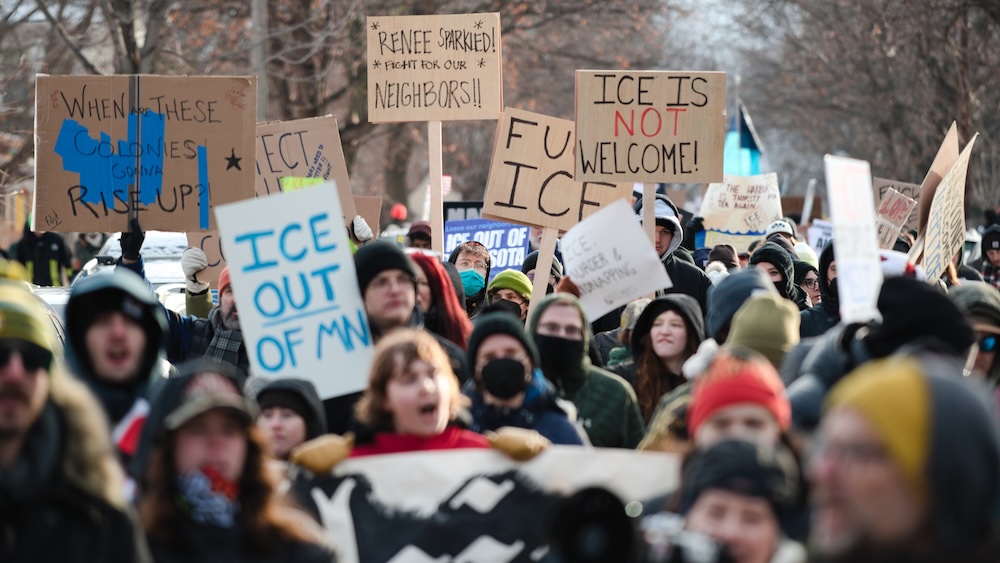
At the eye of the storm in Minneapolis, hospitality leaders stepped up to reassure their neighbors and model the power of local coalitions against outside forces. Photo courtesy Chad Davis Photography
With World Cup soccer matches scheduled in 10 U.S. cities in 2026 — and the 2028 Los Angeles Olympics just around the corner — the U.S. hospitality sector was set for a banner year. Instead, the Trump administration’s immigration policies have had “a chilling effect” on the industry, as recently reported by The Guardian. The article, “Trump’s immigration siege is rattling hospitality industry, workers say,” lends additional context to a recent report from Unite Here about the knock-on effects of current U.S. immigration policies on the people who keep the hospitality industry running.
Unite Here is the largest union of hospitality workers in North America, with more than 300,000 members in the U.S. and Canada. In February, the union released “Inhospitable: How U.S. Immigration Policy is Harming the Hospitality Sector,” a detailed report that clarifies three major trends that, taken together, signal an ongoing existential crisis for industry workers. First, there are fewer people traveling to the U.S. — the report cited a 2.5-million drop in international visitors in 2025. Second, the U.S. is seeing lower employment across tourism and hospitality, with 98,000 fewer people employed in leisure and hospitality roles in December 2025 than at the same time the previous year. Third, hotel revenue is flat, with a 5.5-percent decline, equivalent to about $1.2 billion, in September 2025 compared to the previous September (the latest data available at the time of the report’s publication).
These interconnected issues have created a superstorm effect for current hospitality workers and damaged the future talent pipeline. Although the so-called Trump Effect has yet to significantly impact the overall U.S. business events industry, the lower visitor numbers and staffing shortages called out in the Unite Here report will be felt by the meetings industry down the line.
The authors of the report didn’t mince words in staking out the boundaries of the current crisis. “Despite a boom in tourism worldwide, and major travel events like the World Cup on the horizon, the U.S. market is stagnating. Growing signs point to the detrimental impact of actions from the White House, including political statements from government officials creating a fear of discrimination. These are reinforced by highly visible videos and photos of military occupations in major American cities and ICE [U.S. Immigration and Customs Enforcement] agents rounding up immigrants en masse.”
 Subscribe to Convene.
Want deep-dive insights on events delivered to your inbox? Sign up for our newsletters.
Neighbors Helping Neighbors
All eyes were on Minnesota from December 2025 through mid-February as Operation Metro Surge, a collaboration between ICE and the Customs and Border Protection (CBP), brought more than 3,000 officers to the Twin Cities and nearby communities. Billed as the “largest immigration operation ever” by ICE Acting Director Todd Lyons, the months-long campaign resulted in thousands of arrests and at least three deaths.
“Many of our members have been afraid to go to work,” Wade Lüneburg of Unite Here’s Minneapolis-based Local 17 chapter told The Guardian. He shared how 16 Minneapolis-St. Paul airport workers were detained by immigration enforcement earlier this year — even though they were authorized to work and had passed TSA background checks.
At the eye of the storm in Minneapolis, hospitality leaders stepped up to reassure their neighbors and model the power of local coalitions against outside forces. “In 2020 we felt like we had seen it all and we’d be prepared for whatever happened next. Then this unplanned trauma occurred and we called upon some of the same lessons,” Melvin Tennant, CAE, president and CEO of Meet Minneapolis, told Convene, referring to the aftermath of George Floyd’s murder by a Minneapolis police officer. “We had a lot of real-time information because some of our board members are actual small business owners, including restaurateurs and other businesses that literally experienced a direct impact from Operation Metro Surge.”

Melvin Tennant, CAE
Tennant and the Meet Minneapolis team shifted into high gear to help their community navigate choppy waters. “We know a lot of our businesses are impacted and so we had to pivot from outbound marketing to an initiative we called ‘Minneapolis for Minneapolis,’ encouraging local residents to frequent small businesses that were impacted by Operation Metro Surge,” Tennant said. The destination management organization also hosted research webinars so that partner businesses would know what to expect as immigration operations continued in the area throughout January.
While CBP and ICE activity disrupted day-to-day life for Minnesotans, the city’s meetings economy has remained stable overall. Only two local events were canceled during the months-long occupation. Even better, in late January, the Public Library Association proudly announced that it “stands with Minneapolis” and would hold its 2026 annual meeting at the Minneapolis Convention Center, April 1-3, bringing an estimated 5,000 attendees to the city. (While Operation Metro Surge has concluded, ICE and CBP agents continue to operate in the Twin Cities at the time of this writing.) “I think what this latest experience with Operation Metro Surge showed is that Minneapolis is a very strong and resilient community,” Tennant said. “We have seen neighbors helping neighbors, which really speaks to the character of this destination, because in many ways we can’t necessarily compete with some cities based on just bricks and mortar.”
‘A Self-Inflicted Injury’
Although the impact of Minnesota CBP and ICE operations on local meetings and events business has been minimal to date, Minneapolis is still feeling the chill as inbound travel to the U.S. drops off. “We’ve been experiencing a downturn in Canadian travel, our biggest non-U.S. audience,” Tennant said.
Minneapolis is not alone: According to the Unite Here report, around half of major U.S. markets reported year-over-year declines in bookings in late 2025. Based on data from surveys and industry sources as well as government travel advisories issued in 2025 and 2026, the authors conclude that the marked decline in tourism is largely “a self-inflicted injury.” They zero in on Las Vegas to illustrate the impact of lower visitor numbers on a local economy: “The decline of tourism in Las Vegas is reflected in the public financial reports of the major Las Vegas casino companies, which saw their Strip operations’ property EBITDA decline from 3 percent to 10 percent through the first three quarters of 2025.” In an effort to counter the decline in Canadian visitors, a private casino in Las Vegas said it would accept Canadian dollars on par with U.S. dollars, effectively offering a 27-percent discount to patrons showing up with the northern currency.
While creative solutions like this speak to the ingenuity of people who work in tourism and hospitality, price cuts only go so far in a politically charged environment. The Unite Here report included an excerpt of a speech made by Eileen Higgins, Miami’s first female mayor, that cuts to the heart of the issue: “We have this politics of trickle-down hatred that are coming from the federal government, and in our case, sadly, our state government.… Not only is this mean and cruel and inhumane, it’s just simply bad for the economy.
Kate Mulcrone is Convene’s digital managing editor
- Download the full Unite Here report.
- Read The Guardian story on how the Trump administration is impacting hospitality workers.