 Log In

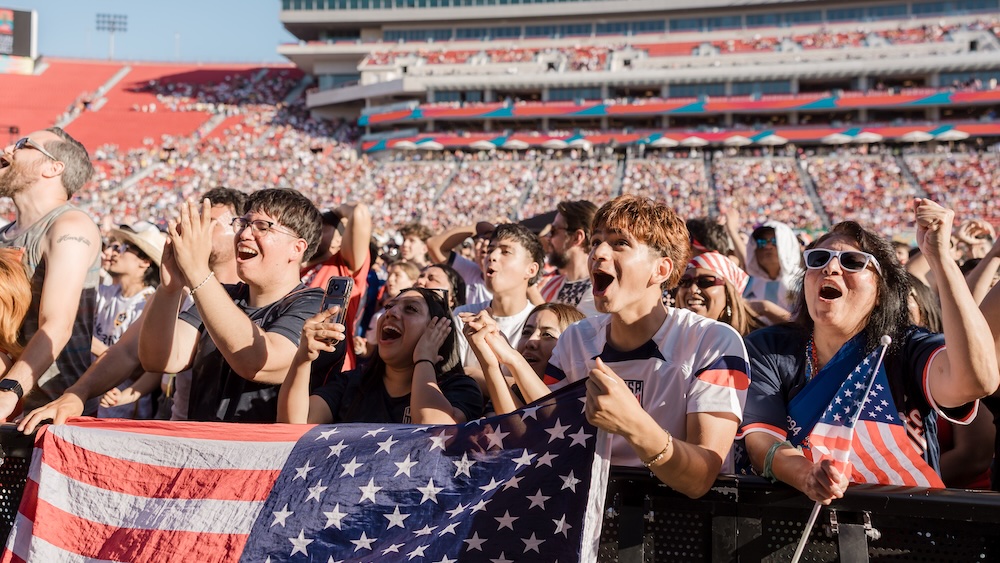
According to a poll conducted by the U.S. Travel Association following the 2026 FIFA World Cup, 81 percent of Americans said watching international visitors enjoy the nation’s communities, culture, and attractions made them feel proud, and the same percentage believes it is important that international travelers have a positive experience while visiting the United States. Photo by Sarah Mack.
Judging by several metrics, the FIFA World Cup 2026 was the most successful in the tournament’s history. Forty-eight national teams, the most ever, participated in the 2026 tournament, which due to a new expanded format also saw the most matches played (104). It was the first to be held in more than one location (three countries), and it drew the highest number of fans ever — a reported 6.8 million. In addition, more than nine million fans participated in official FIFA Fan Festivals, the highest attendance in the special event’s 20-year history. According to FIFA, the 2026 tournament was the largest sporting event in history, period.
But how did these superlatives translate to wins for the host cities themselves? For most, hosting provided a boost in visitation, hotel revenue, and economic impact. Tourism Economics estimates that the three nights surrounding matches alone generated $633 million more in revenue for hotels in U.S. host markets than they would have seen without the World Cup. Although many destinations have yet to share final numbers as of press time, New York/New Jersey reported an economic impact of $3.5 billion to the area, exceeding initial expectations by $200 million. And a mid-tournament report from Bank of America Institute showed that consumer spending in host cities jumped by 5.4 percent, year-over-year, from June 10 to June 28.
But there were also shortfalls. Overseas arrivals to the U.S. did not increase as much as hoped, with both June and July seeing declines, continuing a long-running slump for inbound tourism to the U.S. (However, Tourism Economics research showed that overseas arrivals from World Cup participant countries declined less than arrivals from non-participating countries.) Hotels in some U.S. host cities saw disappointing demand compared with initial forecasts that, according to reports, points to continued travel concerns from international visitors, barriers to obtaining visas, and overestimated room blocks.
Ups and downs aside, the World Cup offered a rare opportunity for host cities to showcase themselves on a world stage. Convene spoke with representatives from destination marketing organizations in three U.S. host cities to take a pulse on how the tournament has impacted their future event business pipeline, the effect on their brand visibility, and how the experience has shifted their approach to hosting large-scale, citywide events.
‘World’s Biggest Stage’
DMOs Convene spoke with reported a tangible, if still early-stage, connection between hosting the World Cup and new interest from meeting planners. That includes Kansas City. The smallest of all of the 2026 host cities, Kansas City kept pace, and in some cases, beat out its larger co-hosts.
During the World Cup, Visit KC jumped on the opportunity to bring nearly 40 potential and existing meetings customers to its six matches as a show-and-tell of how the destination performs in real time. Besides seeing matches in-person, the FIFA Fan Festival, a 19-day celebration at the National WWI Museum and Memorial, impressed planners the most, according to Nathan Hermiston, Visit KC’s SVP of sales and services. The National WWI Museum and Memorial served as a focal point for the experience — a free, open-to-the-public mini city of activations, including a stage, premium viewing and lounge spaces, local F&B stations, and more.
Nathan Hermiston
Hermiston said the FIFA Fan Festival was designed to give fans “a more concentrated experience” of KC. And for Visit KC’s visiting customers, seeing it in person “solidified their belief that Kansas City is a city that can host their meetings and conventions,” he said. “I really can’t think of one customer that came in that walked away going, ‘Oh, I still have questions.'”
Meet Boston also found value in playing host. Rather than just telling planners that Boston can host complex global events, said Nik Pereira, Meet Boston’s SVP of sales and services, “what the World Cup demonstrated was that we can do this. And it was on the world’s biggest stage.”
“We’ve seen a noticeable increase in conversations that my team is having with planners in the U.K., in Scotland, who experienced Boston either in person [at] the World Cup or following on social media throughout the tournament,” said Pereira, referencing the viral connection between Boston and visiting fans of Scotland’s national football team, dubbed the Tartan Army. “And they saw firsthand how Boston successfully woke up hundreds of thousands of visitors.”
Another avenue created by that bond is the launch of a new international partnership with Glasgow, to be built “on strong historic links, shared values and the collaboration during the 2026 FIFA World Cup” according to the City of Glasgow’s letter of intent, and will reflect “shared values between Glasgow and Boston, with opportunities to work more closely across key areas including innovation, education, sustainability, tourism, and economic development.” This sister-city partnership may pave the way for hosting opportunities for events from the region. “There’s so much synergy between our two cities, I feel, between the health-care sector, education…I think that’s a lot more opportunity for the future, broadly across the U.K. market and beyond,” said Pereira.
Activating Events at Scale
If there’s a destination stealing the spotlight for hosting sports events right now, it’s Los Angeles. In addition to eight World Cup matches, 2026 brought the NBA All-Star Game and U.S. Women’s Open golf championship to the destination, and next year LA will host Super Bowl LXI and the 10th anniversary of the Laver Cup, followed by the 2028 Olympic and Paralympic Games.

Adam Burke
By the time the Olympic Games begin, several infrastructure projects will have come to fruition, including a $15-billion modernization of Los Angeles International Airport (LAX) and a $20-billion expansion of the LA Metro. In addition, a $2.6-billion expansion of the Los Angeles Convention Center will be partially ready. In the meantime, hosting a half-million visitors for the World Cup this summer, “gave us an opportunity to correct perceptions about how ready LA is to have infrastructure that allows us to activate events at scale,” Adam Burke, President & CEO at the Los Angeles Tourism & Convention Board, said.
One example is how LA decentralized its World Cup experience — eight matches, the FIFA Fan Festival, 39 days of activations, and 26 Fan Zones spread across every region of LA — showcasing how a city can adapt its public spaces and coordinate with multiple communities for large-scale events. Not only did the 26 Fan Zones give visitors a chance to watch matches, sans tickets, in unique-to-LA public spaces like the Original Farmers Market, Venice Beach, and Fairplex, it also helped to bring “the entire community and visitors together,” Burke said.
“I think that’s definitely a lesson to apply moving forward,” Burke said. “There’s a huge energy around that. I also think it builds on the foundation from a citywide perspective, because the one thing that a lot of people didn’t know about Los Angeles before World Cup is how significant the investment in infrastructure has been.”
That includes the enhanced bus and metro services for World Cup visitors, which will also be central to the city’s plan for the 2028 Olympic and Paralympic Games. But for now, Burke said, “there’s already a proof of concept showing that, absolutely, you can get around to all the venues car-free.”
 Subscribe to Convene.
Want deep-dive insights on events delivered to your inbox? Sign up for our newsletters
Changing Perceptions
For the U.S., the biggest win of the World Cup didn’t happen on the field; it happened in the stands, streets, and bars across the country, in authentic moments of connection and camaraderie between strangers captured in now-viral social media posts.
“I truly believe that this event helped change the perception of the United States as a visitor destination for those coming from overseas,” said Meet Boston President and CEO Martha J. Sheridan during a webinar on the World Cup hosted by Tourism Economics in August. “I think people feared the worst and the best happened.”
Of the social media coverage around Boston, “that all came out in such meaningful ways,” Pereira said. “That’s not something that we could have imagined, we could have planned for, or we could put marketing behind.”
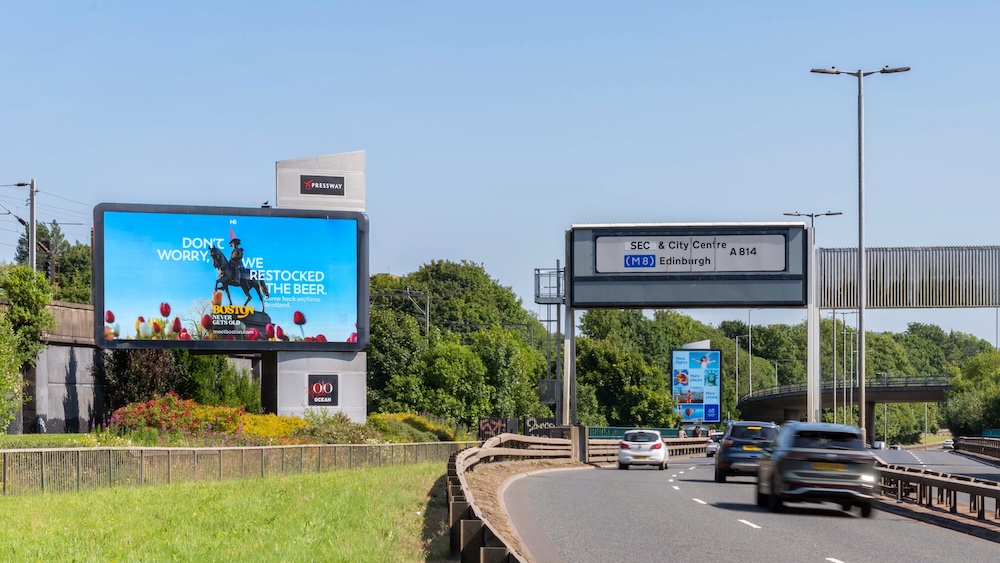
Meet Boston launched a billboard campaign across Scotland after hosting the Tartan Army during FIFA World Cup 2026.
However, it did inspire them to run a post-World Cup campaign across Scotland: digital billboards playfully calling out the Tartan Army’s most viral moments. “Don’t worry, we restocked the beer,” said one; “No Boston. No Party,” said another, referencing how Scottish soccer fans drank one Boston bar dry and placed traffic cones atop Boston statues (a tradition started with the Duke of Wellington statue in Glasgow).
Brand USA seized the moment, too, launching the “More to Love” social media campaign thanking soccer fans who traveled to the U.S. for the World Cup. Travel Weekly reported that Robert O’Leary, director of the National Travel and Tourism Office at the U.S. Department of Commerce, called the soccer tournament “perhaps one of the greatest public relations events in American history.”
Perhaps it’s working. Pereira shared that when he hosted Canadian travel-trade guests who felt skittish about coming to the U.S., after watching the World Cup, he said, “they felt excited to visit.”
Jennifer N. Dienst is senior editor at Convene
Watch Tourism Economics’ webinar, “The World Cup: A Data-Led Debrief on US Lodging and Visitation” on demand or download the full report, “World Cup Summary: US Hotels and International Visitation.”