 Log In

An expert who assists in harassment and toxic conflict management for organizations and networks shares some best practices for planners, drawing on recent experiences at the American Diabetes Association’s 2026 Scientific Sessions in New Orleans. Photo: Adobe Stock
The American Diabetes Association’s (ADA) 2026 Scientific Sessions in New Orleans — held this year June 5-8 — was a meeting of the minds for around 12,000 medical professionals from around the world. This year’s meeting came at a time of uncertainty in the U.S. and further afield, as sweeping changes in government and funding cuts have changed the stakes for certain scientific meetings.
“As the 2026 Scientific Sessions begin, this year’s program reflects the depth and urgency of the work advancing diabetes research and care,” Rita Rastogi Kalyani, MD, MHS, the ADA’s chief scientific and medical officer, said in a press release. “The research presented highlights the growing impact of diabetes and obesity, and the continued need to accelerate scientific progress. Together, these studies expand and deepen our understanding while paving the way for better treatments, stronger prevention, and ultimately, cures for diabetes.”
Unfortunately, the meeting was disrupted by attendees’ activity on the first day of programming when several ADA members were physically removed by local police from the meeting for handing out copies of an editorial criticizing cuts to research grants and intervention programs that was published in the June 2026 issue of Diabetes Care, the official journal of the ADA. Aaron S. Kelly, Ph.D., a professor of pediatrics at the University of Minnesota who was among the researchers escorted out, told the New York Times that security staff asked the group to leave the Ernest N. Morial Convention Center and tried to take away the materials they were distributing. When the researchers re-entered the convention center from another entrance, they were met by security staff and police officers.
The disruption caused a significant stir and generated negative press. It also had additional repercussions within the membership. Diabetes researcher Mark Atkinson, the chair of the conference scientific sessions, and endocrinologist Jennifer Green, the ADA’s president-elect, both resigned in the immediate wake of the controversy in New Orleans on June 5, as first reported by MedPage Today.
Making the Case for an Independent Review
Discord can be healthy for any organization, no doubt. While event organizers can’t prevent every disruption, it’s worth reviewing some tactics that will help shape where and when this can happen at an event. For organizations being impacted by some of the sweeping changes in government, this can be especially timely.
When Convene reached out to the ADA for comment, the organization responded with a link to a video from ADA president Charles Henderson addressing the June 5 incident. In addition to his personal apology to the ADA members who were asked to leave the conference, Henderson acknowledged the impact of what happened at the meeting on the broader community of diabetes researchers. “The ADA will continue to advocate for robust NIH funding, support the pursuit of scientific discovery, and advocate for the broader research community whose work advances knowledge, drives innovation, and ultimately improves the lives of people living with diabetes, obesity, and related conditions,” he said. Henderson also shared that the association will pursue an independent review of what happened at the conference and update members on its findings and future action.
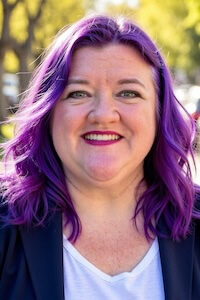
Paula Brantner
Bringing in an impartial third party is a logical next step for the ADA, since emotions are likely running high on all sides in the immediate wake of the meeting. “There is no way of investigating the whole situation, even with careful discretion, that cancels out what already happened,” Paula Brantner, principal of Accountability Ignited, a consultancy that assists in harassment and toxic conflict management for organizations and networks, told Convene. She recommends that her clients engage in advance planning and working through hypotheticals of what could go wrong onsite, including a worst-case scenario where up and coming scholars are driven out of the profession, rather than attuning to the best possible outcome. “Ideally, an association wants to encourage as many people as possible coming in to feel welcome, to feel like this is their professional home, and provide them with opportunities to advance their careers.”
 Subscribe to Convene.
Want deep-dive insights on events delivered to your inbox? Sign up for our newsletters
Operating in a Gray Area
While the brief fracas with Louisiana State Police created a stir, it’s unclear exactly why the researchers at the ADA Scientific Sessions were threatened with arrest. When attendees decided to distribute printed copies of the editorial onsite at ADA, they were operating in a gray area. The ADA’s code of conduct does not have language that explicitly prohibits distributing supplemental conference material to attendees. The prohibition of “disorderly conduct or disruptive conduct such as protesting” is the closest the policy comes to addressing the incident at this year’s Scientific Sessions:
Excerpt:
All attendees will conduct themselves in a professional and respectful manner, free from any form of discrimination, harassment, or intimidation. Inappropriate conduct, including but not limited to harassment; threatening or unwelcome physical or verbal actions; or disorderly or disruptive conduct such as protesting, will not be tolerated.
Referring to “disruptive conduct” without going into specifics may have caused the confusion onsite. Brantner shared some best practices for creating a more comprehensive code of conduct for association events. “We always try to write them broadly enough to anticipate a wider range of circumstances,” she said. “We might suggest language along the lines of ‘distribution of materials is limited,’ because we’re not trying to stifle anyone. But if it was something like hate speech, or commercial solicitation from someone who had not paid to exhibit, then there are things that people pass out that would be completely reasonable for an organization to want to prohibit and invoke the code as the reason for doing so.” She also suggests that organizations explore solutions to incivility or disagreements at events that could de-escalate situations. When attendees feel strongly and believe their emotions are justified, it’s important to acknowledge their feelings without endorsing disruptive behavior that would lead to removal from the event.
“Often people are there to speak, and they miss out on professional opportunities, and they don’t have a flight back for a couple days,” Brantner said.
However, even the most bulletproof code of conduct won’t prevent untoward incidents if no one reads it or if an attendee has an agenda to invoke disruptions. Brantner advises event planners and other meeting stakeholders to familiarize attendees and potential attendees to events’ policies ahead of time rather than onsite. “I work with clients to publicize the codes of conduct and the reporting system every way we possibly can. For example, you can send it out via social media in advance, put it in the conference app, in daily communications, or even on the intro slide before a session starts,” she said. “A lot of groups don’t do that, and the code is sitting somewhere three clicks down on the website, or people only see it when they register and they click through because it is required to complete registration, but that doesn’t mean they read it.”
While the disruption at this event was unfortunate for all involved, especially attendees who traveled to present their own unrelated research, the group of diabetes researchers succeeded in their mission to draw attention to their editorial. The ADA also created a new portal for members to submit public comments on the White House Office of Management and Budget’s proposed Guidance for Federal Grantmaking, addressing the issue at the heart of the Diabetes Care editorial in a way that will help members elevate their voices.
Kate Mulcrone is Convene’s digital managing editor.
- Read the New York Times’ coverage of the ADA 2026 Scientific Sessions.
- Learn more about Paula Brantner’s work.