 Log In

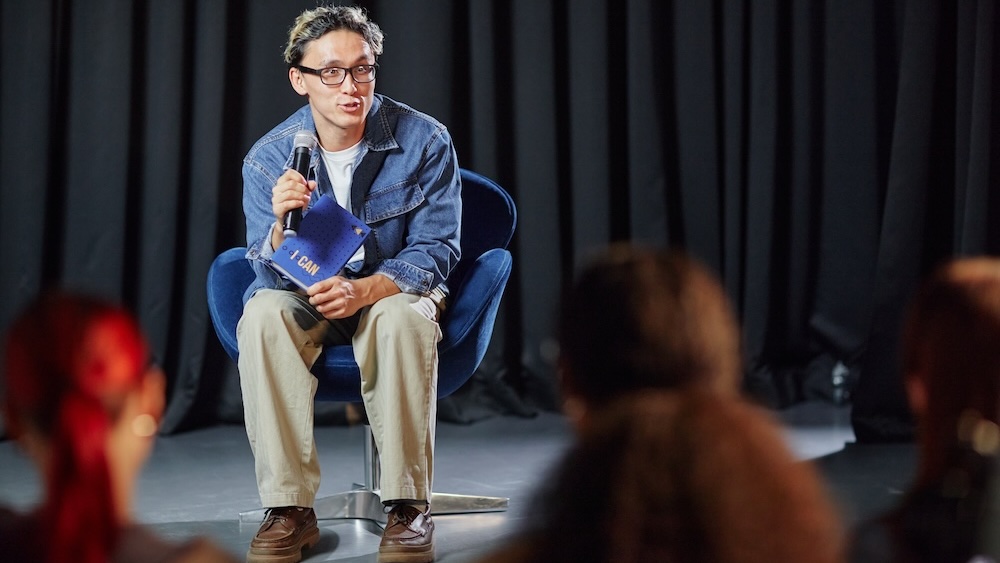
‘If we can design events that make people braver — less intimidated, more inspired — then the next generation will keep showing up.’
On a Tuesday night in Waterloo, Canada, Ethan watches an AI summit on his laptop. He has seen this talk before — the same slides, the same jokes, even the same standing ovation. Still, he insists he would pay to attend it live. “It’s not the information,” he said. “It’s being in the same room with all the smartest people. You plant a seed inside your heart.”
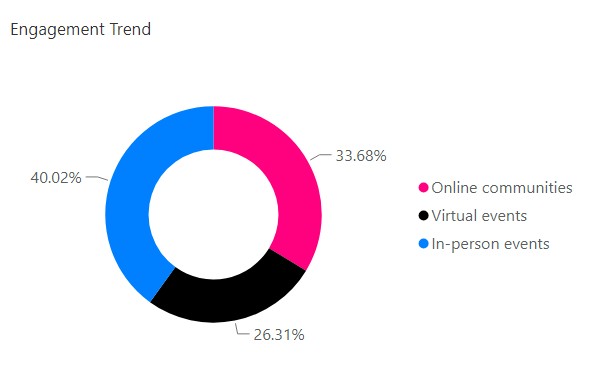
Ethan is one of 20 young professionals across five continents who were interviewed by MCI Canada’s Data & Analytics team as part of research surveying 1,342 international Gen Z participants — the first generation of fully digital natives. His sentiment captures a paradox at the center of today’s meetings industry. For the next generation of professionals, online convenience has not replaced the pull of presence. Results of the MCI study revealed that in-person events remains their top choice for engagement — 40 percent preferred live gatherings, followed by online communities (34 percent) and virtual events (26 percent).
 Sure, technology has made participation effortless. One can stream a keynote while commuting, replay the Q&A at midnight, or message the speaker directly on LinkedIn. Yet, Gen Zers are buying plane tickets, pinning on name badges, and taking their place in coffee lines during session breaks.
In 2010, event planners raced to digitize. They built apps, streamed plenaries, and promised virtual engagement. Fifteen years later, their youngest audiences are quietly reversing course. They are still digital, of course — phones in hand, networks in their pockets — but they show up for something algorithms can’t replicate. They come for intensity. Neuroscientists might call it mirror-neuron activation; psychologists, emotional contagion.
Here are critical insights revealed in the research about what draws Gen Z to events and how to design for this cohort of participants.
Design for Belonging
Michelle, a medical student interviewed for the study, remembers her first academic conference vividly. She stood frozen in the corridor, badge twisting in her hands, surrounded by older experts who seemed to speak a language she had never learned. “I didn’t know what was expected of me,” she recalled. A year later, she returned to the same event, but this time she stayed the entire day. The event organizers had introduced a first-timer lounge, simplified session levels — 101, 201, 301— and created informal introductions before the plenary. “It suddenly felt like they expected me to be there,” she said.
Every successful event begins long before the opening keynote. It begins in the threshold moment when someone decides to walk in. The best organizers understand that nervous energy is part of the experience — and design for it. Michelle’s fear evaporated when she found a clear entry point: a smiling host, a welcome table marked “new here?”, and a question that asked what she hoped to learn rather than what she did. In that instant, she shifted from outsider to participant.
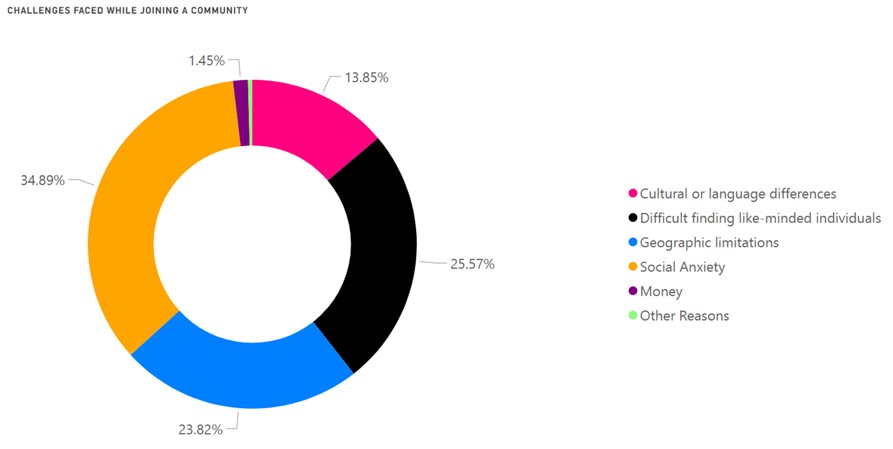
Her experience mirrors the data from our research: Social anxiety ranks as the No. 1 barrier to event participation, far surpassing cost, time, or travel. What they’re seeking isn’t attendance — it’s agency. When asked what motivates them to register, participants didn’t mention a reasonable price or the event’s prestige. Their leading reasons were career advancement (46 percent) and access to resources (38 percent).
 Understand the Need for Context
Brianna, a young health-care professional from Toronto, said, “I’ll pay for the ticket, but the real value happens between sessions, in conversations with people who actually get it.” Conferences once traded on information scarcity; today, knowledge is everywhere. What people pay for now is context — that electric mix of friction, serendipity, and possibility that only happens when strangers share a table.
In this way, modern participants behave less like loyal members and more like discerning users. They browse agendas, compare experiences, scroll through event reels, and decide —often at the last minute — whether to “swipe right.” Their behavior resembles a cultural pattern shaped by dating apps: a mix of curiosity, experimentation, and a desire for authentic connection after an abundance of digital options. The new participant, like the new dater, wants to test the chemistry before committing.
Miriam, a nutrition student from Guadalajara, illustrates how belonging now extends beyond geography. Years after finishing an exchange program in Finland, she still checks the WhatsApp group that connected her with classmates across Europe. “I’m not there anymore,” she said, “but I still feel part of it because I made a difference.”
For Miriam, community equals continuity. It isn’t just who you meet — it’s what happens afterward. The survey confirms this instinct. Participants ranked as their most valuable takeaways in-person networking (31 percent), certifications (28 percent), and job resources (28 percent). These are not passive benefits but active verbs — meeting, earning, building.
For Heena (not the same Heena who is a co-researcher in the study), a quality-testing professional in Birmingham, U.K., participating in events has introduced her to people outside her immediate sphere. “Comfortable communities can make you stop growing. You need rooms that challenge you.” Younger professionals don’t attend to reaffirm what they know; they attend to feel possibility. They are not seeking home — they are seeking forward motion.
Mihir, a biotech product manager from New Jersey, describes conferences as “places for collisions.” He seeks sessions outside his comfort zone because, as he put it, “that’s when you meet someone from a totally different field and suddenly your own work makes more sense.” He calls it knowledge spillover — the spontaneous exchange that occurs when boundaries blur.
It’s the same workplace value Deloitte observed in young professionals in its 2024 Gen Z & Millennial Survey: Learning and growth opportunities are now the most powerful driver of employee loyalty driver, second only to purpose.
 Subscribe to Convene.
Want deep-dive insights on events delivered to your inbox? Sign up for our newsletters.
Prioritize Authenticity and Credibility
Gabriel, a data analyst from Recife, Brazil, spends his nights in a Telegram coding
group, where hundreds of users exchange advice, troubleshoot errors, and celebrate small wins in the app. “Nobody says good morning,” he laughs. “But if someone posts a question, you get help within minutes.” It is the purest expression of the modern learning instinct: high trust, low ceremony, and zero patience for pretense. In a way, Gabriel’s coding chat is the conference of the future — fluid, self-organizing, and relentlessly useful.
The same demand for authenticity shapes how Gen Z engages with brands. When asked to name companies they trust, participants chose Apple and Nintendo not for novelty but for reliability. “They don’t fail you,” one of the participants in the study said. “They connect you.” In meetings, that same logic applies. A well-designed session is one that works — technically, emotionally, and interpersonally.
Ethan, the AI enthusiast from Waterloo, wants that spirit of discovery translated into challenge. “Don’t give me points,” he said. “Give me people to build with.” When gamification becomes purpose-driven — hackathons, data sprints, live prototypes — it stops being a gimmick and becomes a growth engine.
In an age of noise, credibility has become experiential. Participants no longer take organizers at their word; they look for proof in every interaction. A well-moderated chat, a quick answer from a peer, a moment of real empathy — all these build trust faster than any brand campaign.
Gabriel’s coding community succeeds because it delivers immediate utility. Brianna’s favorite sessions are the ones where speakers listen as much as they speak. Heena returns to events that feel diverse not for optics but for ideas. These are not luxuries; they are signals of authenticity — the new measure of authority in the meetings world. The goal is no longer to fill rooms but to design encounters. The best conferences now function as ecosystems — part classroom, part studio, part social experiment — where participants are co-authors, not consumers.
Mine the Event’s Potential
When the applause fades, continuity must begin. When the event ends, Ethan wants “a reading list, people to follow, and a way to keep learning.” The strongest conferences already script that journey: curiosity on day one, reconnection by week two, and collaboration within months. The event doesn’t end; it evolves.
Deloitte’s research found that Gen Z seeks “belonging with boundaries, flexibility with meaning.” Translating that insight into events means building hybrid frameworks that are human by design and purpose-driven by default. The future of meetings won’t be measured by attendance but by alignment — how effectively each participant finds their match, their moment, and their next move.
It’s not about acquiring information, but about becoming. If we can design events that make people braver — less intimidated, more inspired — then the next generation will keep showing up. Not for what’s on the screen, but for who they might become in the room.
Juliano Lissoni is managing director Canada, for the MCI Group. Heena Chauhan is a registration services associate at MCI Canada who worked as a data analyst on the study.