 Log In


Navigating shifts in the business world and larger society is nothing new to the National Black MBA Association.
The crowds have been noticeably thinner than usual at some major conferences held in the past few months,” a December 2025 Nature article noted. Those major conferences the article is referring to are U.S. conferences designed for scientists from marginalized backgrounds that are experiencing the impacts of the current administration’s funding cuts and anti-DEI directives.
Nature highlighted how a November 2025 joint meeting of the National Society of Black Physicists and the National Society of Hispanic Physicists drew fewer than 700 scientists, compared with 1,100 who attended in 2024. And in the previous month, there were only a few thousand participants at the conference hosted by the Society for the Advancement of Chicanos/Hispanics and Native Americans in Science vs. the usual 5,000-6,000. “Federal agencies that would normally have exhibit booths at such meetings to promote their research, as well as staff members on site to speak to prospective employees, were also not present,” the article noted. “Federal funding that is normally available to pay for students’ travel to these conferences has also dried up.”
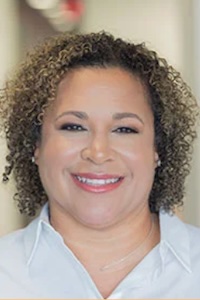
Elaine Richardson, CAE, CMP
Similar challenges are being faced by another association that focuses on the talent pool, convening underrepresented business professionals: the National Black MBA Association (NBMBAA). At its 47th Annual Conference & Exposition, held Sept. 24-27, 2025, in Houston, Texas, which usually attracts between 8,000-10,000 attendees, “we saw an attendance drop in the 40-percent range,” Elaine Richardson, CAE, CMP, NBMBAA’s vice president, conference & events, told Convene.
While Richardson attributed some of that decline to the administration’s targeting of DEI initiatives, she also pointed to other factors, including an uncertain economy, having an impact.
Corporate Recalibration
Navigating shifts in the business world and larger society is nothing new to NBMBAA. The association was founded in 1970 by University of Chicago MBA students, “who got jobs in corporate America, looked around, and didn’t see anyone who looked like them,” Richardson said. The goal of the organization has always been to lift each other up and to continue the pipeline. “We feel like it’s critically important to make sure we can continue to do that, just because not everyone has the same opportunities.”
After George Floyd’s murder, “there was a big outpouring of spending on particular issues, especially related to underrepresented groups,” Richardson said. Things have changed since then. “The thing that I think is maybe feeling different this time is that there is a lot more infrastructure to take down — diversity organizations are feeling the impacts of where the funding comes from.
“I think for us specifically, there has been an overall recalibration in corporate on how they’re allocating resources,” she said. “They’re saying,Hey, we need measurable ROI. We have to be able to show how we’re spending our money and what it’s doing.’ They are getting significantly more deliberate about this. This is coming at a time when there are a lot of financial pressures on corporate America due to different things that have occurred in the macro environment.”
Another potential drag on NBMBAA conference attendance, Richardson noted, could be an increasing number of corporations investing in their own internal professional development to retain talent rather than sending employees to association events.
NBMBAA holds one of the larger diversity career conferences, Richardson said. “It’s a trade show–looking conference, but it’s a career fair. It’s a hiring fair. Normally, what we’re looking at is MBA students, professionals of color from across the spectrum — because we do have a very multicultural conference — coming to our event. There’s on-site interviewing, hiring, professional development, and a community space where you can convene with people who do what you do and be able to have conversations that maybe you can’t have in every room.”
While 85–90 percent of NBMBAA’s membership is Black, its conference “is closer to 65-percent Black attendance,” she said. “It is an open conference, and it’s meant to be that way because from a hiring standpoint, you want to compete against the best. What we tell employers is it’s really a place for top talent, and it’s a one-stop shop — have interviews on site, have social interactions, and then leave at the end of the week with candidates ready to hire.”
In the past, large companies looking for talent have brought a group of their own employees to the conference because that recruiting effort is easier if prospects can talk to a current employee — something she saw less of last year. “Some of that had to do with the fact that people were just pulling back on hiring in general. That’s the other macroeconomic factor: When you’re hiring fewer people, you don’t have to bring them to our event.
“A lot of corporates are looking around and maybe rethinking their entire hiring strategy. That makes a big difference because uncertainty tends to mean a certain period of paralysis followed by a slower ramp back up. You feel that all the way down the line.”
 Subscribe to Convene.
Want deep-dive insights on events delivered to your inbox? Sign up for our newsletters.
Looking Ahead
Richardson is somewhat optimistic about the upcoming conference in Los Angeles in September. “Things are looking better than they were last year,” she said. “I think the pendulum sort of swung one way — when things are uncertain, people just tend to hold onto money. This is true in every industry. I think that companies don’t understand that you have to be competitive with talent if you’re going to stay ahead of the game.”
But she added: “I’d be lying if I told you that in six months, I have any idea what’s going to happen. All I can do is plan with the understanding that I have of what we do in our space and what we feel is needed and what would be beneficial for our audience now. Then, in talking to corporates, asking them questions about, given where they are, how can we work with them? What do they need to really be able to come with us and work with our audience? Strategic engagement is where it’s at.”
While change is a constant, the “adaptability of the events industry is helpful in this regard.” Still, she added, it would be nice to have “just a little landing pad of calm.”
Higher Ed Restraints
Despite — or perhaps because of — the DEI backlash and macroeconomic challenges, NBMBAA’s Elaine Richardson thinks “there’s even more demand for what we do now. People are looking for those spaces, but the access piece is getting more difficult because the funding structures for universities that bring a lot of students and normally like to go to events like this, are becoming uncertain. They not only have a lot of funding pressure, but they have a lot of attention on how they’re spending their discretionary funds. This makes for a difficult environment.”
Historically, business schools “are a little bit of cash kings for universities and [employment] placement is a big deal. A lot of times, they’re showing the benefit of their [MBA] program by showing where they can place their students.” In prior years, universities would provide significant support for attendance, but she said that over the last year, she has seen that funding shrink.
Michelle Russell is Convene’s editor-in-chief.
On the Web
Learn more about NBMBAA’s upcoming 48th Conference & Exposition.