 Log In

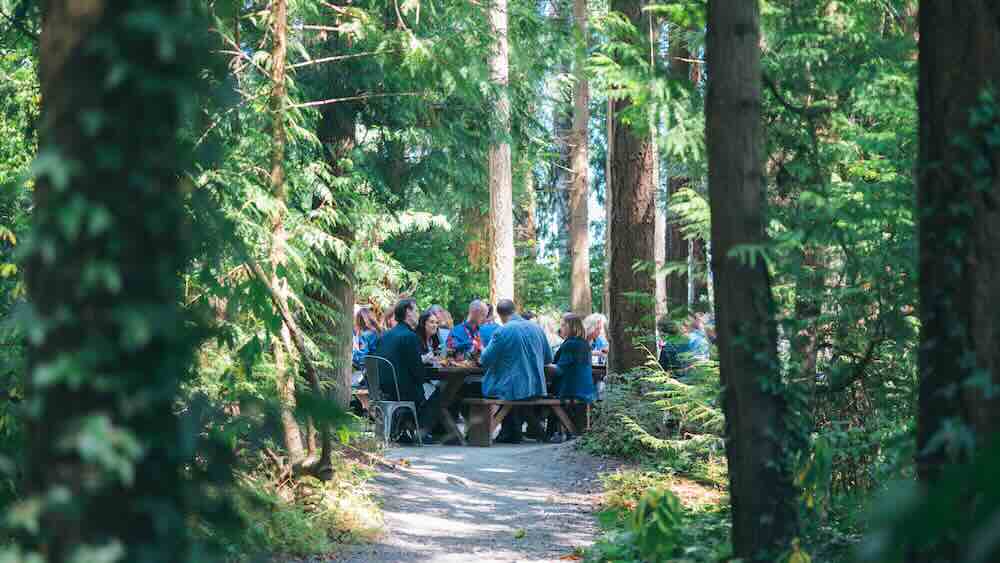
Sea Cider Farm & Ciderhouse, an organic farm where acres of apples are turned into award-winning cider, hosted the group for a memorable meal in the forest. Photo courtesy Destination Canada.
When Destination Canada’s Business Events team invited Convene to participate in the Incentive Canada event in Victoria, British Columbia, joining event suppliers from all over Canada, their clients, and a few industry journalists, we hesitated, but only for a moment.
I was eager to explore Victoria, which sits on a horseshoe-shaped harbor on Vancouver Island’s southern tip — Conde Nast Traveler readers have named Victoria the “Best Small City in the World” for two years running, extolling its abundant natural beauty, historic architecture, and vibrant culinary scene. But incentive planners are not the majority of our audience and we weren’t sure if the event would be relevant to our readers.
I soon became convinced otherwise, however, as I learned more about the city’s meetings infrastructure, including the Victoria Conference Centre, which can accommodate meetings of up to 2,000, and, along with large hotels and other venues, hosts scores of business events every year. I also was excited to experience firsthand what I’d read about Destination Canada’s storytelling approach to event design — the art of creating memorable experiences isn’t just for bucket-list events but has become an essential element for events of all kinds and sizes. I started packing.
Day One: Between Two Worlds
My arrival at Victoria International Airport on a late Sunday afternoon in July was a breeze — there was only one person ahead of me in the customs line. And after a tree-lined, 30-minute-long ride from the airport, I checked into our host hotel, the 477-room Fairmont Empress, a grandly imposing brick-and-marble edifice at the center of the city’s bustling Inner Harbour and an Incentive Canada partner, just in time to watch a pink and orange sunset from the hotel’s waterfront terrace.
The next morning our group met for a 20-minute walk to Fisherman’s Wharf, a working marina and colorful mix of houseboats and open-air restaurants, and headed for Eagle Wing Tours, Canada’s first carbon-neutral whale-watching company. But first we gathered around Cecilia Dick, a storyteller and guide for Songhees Tours, a cultural tourism company owned by the Songhees Nation, who, Dick explained, are the original inhabitants of what is now known as Victoria. Dick welcomed our group warmly on behalf of her community and then came aboard with us.
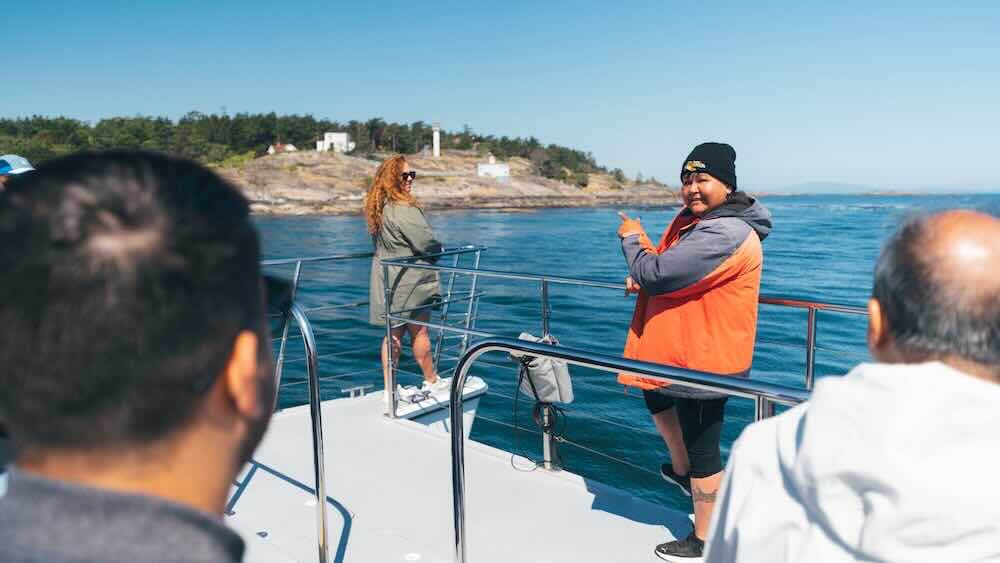
Guide Cecilia Dick, a member of the Songhees Nation, shared stories about the history of the Nation, Victoria’s original inhabitants.
It was exhilarating to head out into the Salish Sea as the crew handed out blankets against the wind, and a naturalist described the migratory paths of orcas. Dick’s presence added another dimension, as she described the water surrounding the islands as her ancestors’ highways and pointed out Discovery Island, where the Songhees had traveled by canoe to survive a 19th-century smallpox epidemic. I sat on the boat’s bow, scanning the waves for whales, as Dick talked about the central role of the sea and the orca whale in her community’s creation story. It had been a clear, sunny morning, but when a thick mist settled briefly on the water just as we spotted a pod of orcas, it brought two worlds together for a moment.
 Subscribe to Convene.
Want deep-dive insights on events delivered to your inbox? Sign up for our newsletters.
Creating those kinds of experiences “is not just about telling a story,” Joel Walton, director of strategic initiatives for business events at Destination Canada, told me later that afternoon over lemonade at a patio behind Victoria’s Steamship Terminal. “It’s about bringing Indigenous groups along and telling that story together.” At Destination Canada, “we use the word ‘transformational’” to describe experiences, he said, “but it’s not just a buzzword. I’ve been part of hosting experiences that change people’s lives.”
That evening, at a reception hosted by the Fairmont Empress, we sipped cocktails and sampled treats including caviar and Cherries Jubilee as we chatted with one another and the hotel’s chefs and culinary team on a hotel terrace overlooking the waterfront. From there, we traveled across the harbor in a little flotilla of water taxis — known locally as “pickle boats”— to the International Marina, custom-built to accommodate yachts more than 65 feet long, for a dinner hosted by event partner Destination Greater Victoria. We gathered in the marina’s sunny “waterfront parlour,” for a presentation by the Lekwungen Traditional Dancers from the Songhees Nation and more feasting on the bounty from Victoria’s farms and fishing boats — all catering for the Incentive Canada trip featured local, seasonal, sustainably sourced ingredients.
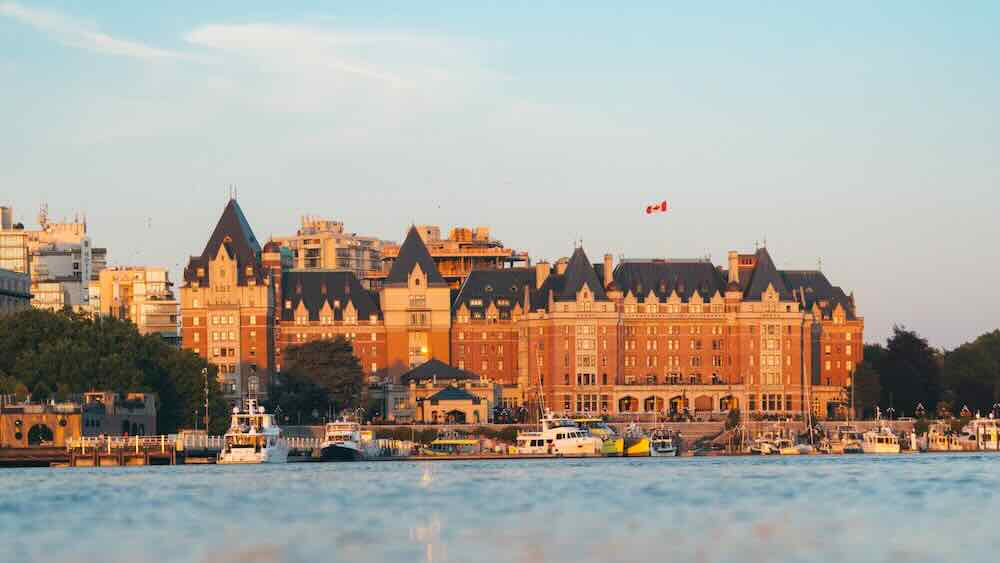
The Fairmont Empress, aka the ‘Castle by the Sea’ has a commanding presence.
Day Two: Sharing Tables
The next morning, we traveled north to the Sea Cider Farm & Ciderhouse, an organic farm where acres of apples are turned into award-winning cider, and where our hosts had set up tasting stations in the orchard. Cider in hand, we moved inside to where tables for supplier/client meetings had been arranged in the venue’s airy tasting room overlooking the orchard, with a trio of musicians in one corner to act as timekeepers. The light, the view, and the gentle musical cues to move from one appointment to the next transformed what might have felt like a blur of information into an experience that baked in lasting memories.
Afterwards, we walked along a trail into a heavily wooded area behind the tasting room. The trail curved into a little clearing where we found two long tables set for lunch along with the musical trio who had arrived ahead of us. We lingered over glasses of cider and wine and a meal of crusted albacore tuna, glazed pork belly from a nearby farm, and mushroom-and-seaweed salad.
That evening we explored Victoria’s downtown, beginning with dinner at the cozy Wind Cries Mary, an award-winning restaurant with exposed brick walls and a menu that the restaurant describes as “coastal cabin.” After sharing family-style platters of locally caught fish and pasta, we were accompanied on the walk back to the hotel by historian John Adams and his son Chris, who operate Discover the Past walking tours, and who brought the streets to life with (often sordid) stories about the ghosts and apparitions that have haunted Victoria’s historic buildings, including the Fairmont Empress hotel.
Day Three: Choose Your Own Adventure
On the morning of the event’s final day, we split up into three groups. One foraged for seaweed by kayak, spotting otters as they paddled along the shoreline, and another relaxed at a floating wellness sanctuary built on a barge. I opted to travel to Church & State Wines, the largest of the more than 800 wineries on Vancouver Island, a 20-minute drive from Victoria. Our morning started with a memorable walk through the vineyard’s rows of vines, followed by a teambuilding exercise in the vineyard tasting room, as we tried to replicate the exact proportions of one of the winery’s red wine blends. It was harder than it sounds, even under the expert tutelage of winemaker Arnaud Thierry, and required much collaborative experimentation — accompanied by many sips of wine. After a tented lunch on the grass, we gathered on the wraparound porch at the vineyard’s restaurant for a conversation between Mark Zanetti, CIS, client engagement manager for business events at Destination Canada, and Annette Gregg, CMM, CIS, Society for Incentive Travel Excellence (SITE) CEO, about trends in incentive events.
Event organizers will increasingly be designing for a younger audience, Gregg said. “We’re seeing a real shift to much more authentic, immersive experiences. So we don’t want to just come and have a great wine-tasting experience. We want to make our own wine, like they did today, right? We don’t want to just kayak. We want to hear about the ecosystem because sustainability is important to this younger generation.” Another thing she sees in the data is that participants want more free time — like the two- and three-hour-long blocks that were built into Incentive Canada’s schedule, she said. It saves money, but that is not the whole point, Gregg said. When participants have time to explore destinations on their own, “you create an opportunity for that transformational moment to be organically discovered [by participants] on their own terms.”
I used the extra time in my schedule to visit venues that could accommodate larger groups. I toured the light-filled lobby at the Victoria Conference Centre, adjoined to the Fairmont Empress, which offers a combined 100,000 square feet of meeting space. I also toured the recently renovated 236-room Delta Hotels by Marriott Victoria Ocean Pointe Resort, with 14,350 square feet of event space, including a 4,000-square-foot ballroom and 10 meeting rooms, and indoor and outdoor space overlooking the harbor.
And I visited the Royal BC Museum and Archives, which was founded in 1866 to collect artifacts, documents, and specimens, and where the exhibits were anything but musty: Beatle John Lennon’s bright-yellow hand-painted 1965 Rolls-Royce is on display in the main lobby. The museum is a popular choice for conferences, said Anita Voorsluys, director of corporate sponsorship, member services and events, and can host groups of up to 800 in the venue, including temporary exhibit space, when it is available, she said. In the past, associations have used the painted marine dioramas in the adjacent Natural History gallery as backdrops for oyster bars and buffets, Voorsluys added.
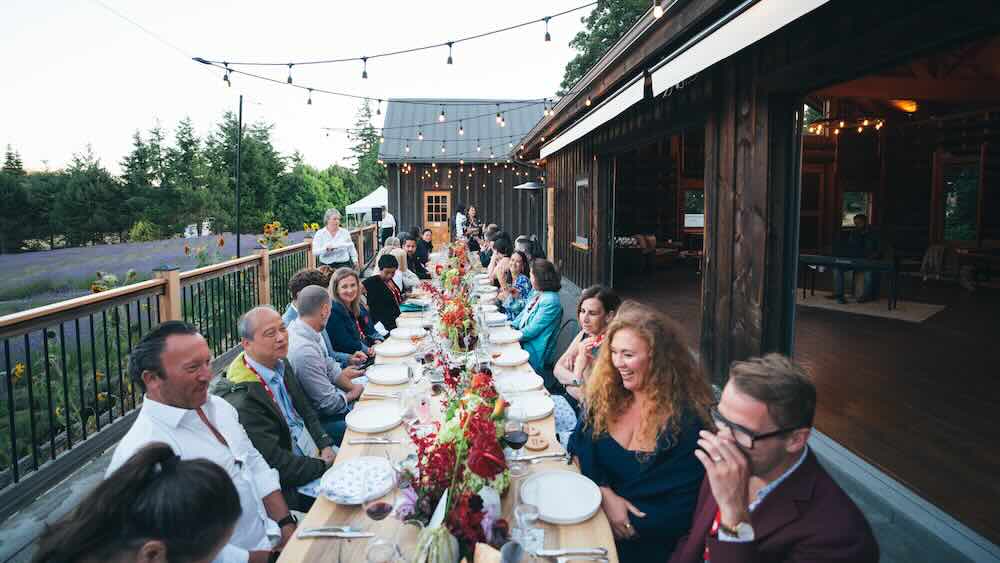
A dinner on the patio at Bilston Creek Lavender Farm comes with lovely views of the lavender field.
The Ultimate Luxury
On Incentive Canada’s final evening, we traveled by boat across the bay to Bilston Creek Lavender Farm, a 175-year-old farm first established by Hudson Bay settlers, and where its current owners cultivate apples and fields of lavender. We sipped on cocktails, settling into sofas and armchairs set under the trees in the late afternoon’s golden light, and took selfies in the farm’s lavender field. Dinner was served on the patio outside the property’s barn, where the weathered wooden walls were hung with thousands of lavender sprigs. We sat again talking at one long communal table during dinner, where there were a few speeches and the fisherman who caught the fish on our plates was introduced and applauded.
As the evening ended, it occurred to me that this was the ultimate luxury — the opportunity to join with 35 people who were strangers at the outset of an event, and, at the end of three days, to have made real connections — not just with one another, but to the history and culture of Victoria.
Barbara Palmer is Convene’s deputy editor.