 Log In


Illustration by JooHee Yoon
Food waste at events often has been viewed through a sustainability lens — with a goal of keeping food out of landfills by donating leftovers to community organizations or relying on venues to compost waste. But what if the goal were expanded to include preventing too much food from being prepared and served in the first place — reducing the cost of food and labor as well as the environmental impact? The best opportunity for that to happen, a new study released in March by the U.S. Food Waste Pact suggests, is when planners and venues work together.
The World Wildlife Fund (WWF) — which, along with the food waste nonprofit ReFED, leads the U.S. Food Waste Pact initiative — began working nearly a decade ago with the American Hotel & Lodging Association (AHLA) to train chefs and kitchen staff on strategies for minimizing food waste, including at events. “What we’ve realized now is that there are two sides to this coin,” said Pete Pearson, WWF’s vice president for food loss and waste, and global initiative lead, food circularity. “There are the venues and the people that operate that whole space, but then there is the meeting planning community — the clientele of those venues — who have to be part of this whole ecosystem of change,” he said. “And that’s been the one deficiency we’ve always had, which is why, over the last couple years, we’ve really tried to come at it from … the meeting planner perspective, because you can’t do this work unless everybody’s involved.”

Pete Pearson
The newly released study, “Low-Waste Events: Measuring & Reducing Food Waste in Events,” measured the impact of food-waste reduction guidelines at pilot project sites at six business events held in 2025. The study states it is the first to “evaluate how coordinated actions between planners and venues can measurably reduce food waste,” specifically by following “a full event lifecycle approach.”
Among their conclusions: Across conferences, meetings, and conventions, large quantities of food go uneaten, not because of intent, but because of fragmented communication, inconsistent planning processes, and the absence of shared expectations between planners and venues. In other words, event planners play an equally important role as venues in determining food waste.
‘Shocking’ Amounts of Food Waste

Tara Dalton
The study’s data set included 20,000 meals, mostly served buffet style or during meeting breaks. The amount of food that went uneaten was “shocking,” said Tara Dalton, WWF’s circular supply chain manager for the food loss and waste team. On average, 42 percent of food prepared for buffets went uneaten — of that, 29 percent met the recovery standards for donation and the remaining 13 percent went to waste destinations like compost and landfill. Those numbers didn’t include food left on plates or back-of-house prep waste, she noted. One truth the percentages reveal, Dalton said, is “that there’s a real fear of running out of food and not providing a quality experience for the client.”
Overordering and overproducing food, according to Pearson, Dalton, and others interviewed for this story, is one of the long-held industry behaviors that the study grappled with. “Nobody wants to disrupt the experience,” Pearson said, recalling conversations he had with a F&B director at a major hotel chain, who told him, “We want to reduce food waste but our clients … never want anything to run out. They want to have this abundance experience and we’re not going to say no to our clients.”
“I think we see a lot of finger-pointing in the industry” over food waste, Dalton said, “with the planner saying, ‘Oh, it’s because the venue’s overproducing,’ and the venue’s saying, ‘Well, it’s because the planner wants this kind of an experience, and we don’t want to upset them.’”
To break the pattern, “we have to be able to be comfortable about talking about an institutional change where client expectations also change,” Pearson said. “And that has always been a very uncomfortable thing for people to want to even talk about because nobody wants to not give somebody a great product.”
But the reality, Dalton said, is “we have so much space to reduce waste before we get even close to running out of food. There is just so much room for progress here.”
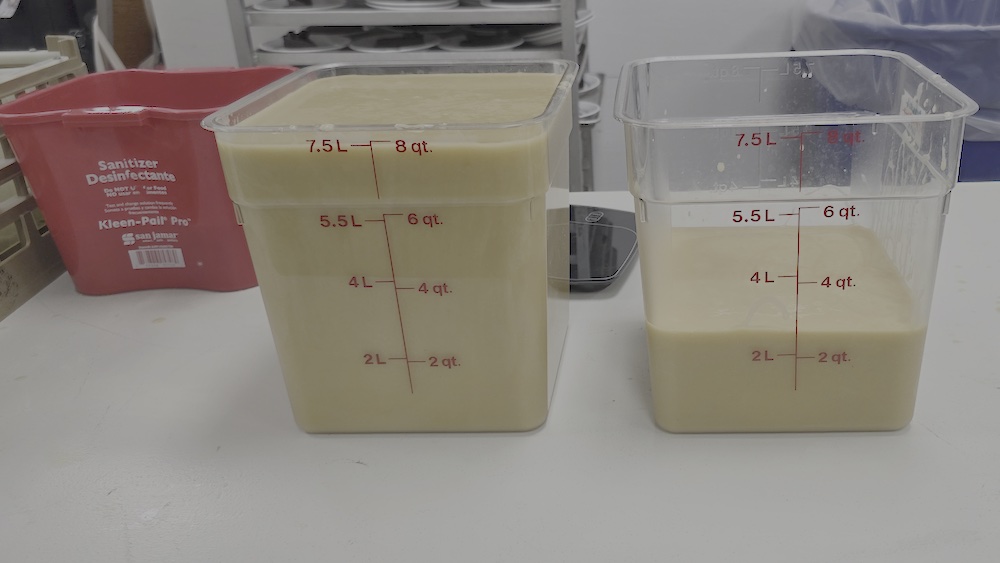
When a venue cut the amount of sauces and salad dressings in half for a 1,000-person lunch, they saved 72 pounds of food and $1,037 in food waste. Photo courtesy ReFED.
Finding the Gaps
According to Convene’s 2025 Meetings Market survey, F&B is the single-largest expense for 65 percent of meeting planners — but it often doesn’t get the strategic attention it deserves. “By and large, folks are not tracking the amount of waste that’s occurring” said Dalton. “There’s just a lack of awareness among the industry on both sides, planner and venue, of the possibilities here for saving on costs.”
Both planners and venues tend to rely on intuition, assumptions, and anecdotal experience rather than on data when planning for and producing food for events, the study revealed. At one event, 72 percent of special dietary meals were discarded due to outdated attendee data provided by the planner and because the venue prepared extra portions “just in case” they were needed. (Attendees choosing other meal options also contributed to the number of meals that were discarded.) At another pilot site, even though planners said that many attendees request butter and cream cheese, the data showed that less than 1 percent actually consumed them.

Molly Crouch
Molly Crouch, corporate sustainability director at Sodexo Live!, said that she frequently sees planners “take last year’s script and just say, ‘Alright, it’s the same.’” Crouch — who participated in one of the study’s pilot sites and also previously worked as director of banquet services at the Orange County Convention Center and catering operations manager at Universal Orlando Resort — said that without some kind of relevant and accurate data, it’s impossible for the venue and culinary team to know where to start.
Meanwhile, on the venue side, inconsistent production practices are common, the U.S. Food Waste Pact study found. Of the six venues that participated in the study, only one used written production specifications across all menu items. At one plated dinner, the banquet event order (BEO) called for 1,200 entrées but the kitchen produced 1,440 plates, a 20-percent overage.
The study took aim at those gaps, by testing a set of practices that incorporated collaborative food-waste reduction strategies implemented from the earliest planning stages all the way through to post-event reporting and data sharing. From the outset, Dalton said, “the planner needs to make clear their desire for a low-waste event. It’s about people seeing [F&B] as part of the fabric of an event plan — communicate with the venue … follow up, track data, and learn from it.”
The study also tested specific practices, including controlling portion sizes and agreeing in advance on how real-time adjustments to food service will be handled on site, based on earlier research conducted by WWF and ReFED.
 Subscribe to Convene.
Want deep-dive insights on events delivered to your inbox? Sign up for our newsletters.
“For the interventions that the study did implement,” Dalton said, “we were able to reduce waste by [an average of] 55 percent in those targeted food categories [where] we used these food waste best practices and guidelines that we were testing at the pilot sites.”
And for the planners who participated in the study, the new behaviors were likely to stick — surveys showed that four out of five reported feeling “very likely” to continue practicing them months later. Venues also are making changes: 90 percent continued internal food-waste discussions; 75 percent maintained right-sized (adjusted according to consumption) serving vessels; and 50 percent made menu or setup adjustments.
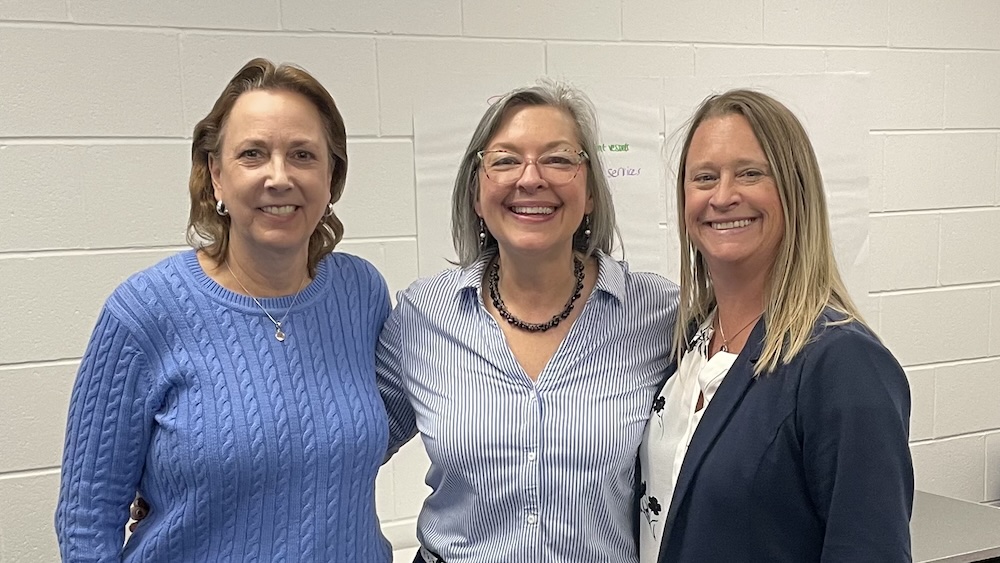
From left to right: Molly Crouch, corporate sustainability director at Sodexo Live!; Dr. Aurora Dawn Benton, founder and chief change maker of Astrapto LLC; and Christy Cook, CEO of InvestHER Strategies. Photo courtesy ReFED.
The Bottom Line
There’s little question that food waste equals wasted money. If each of the 1.9 million business events hosted in the U.S. annually had the same rate of uneaten food as the six events in the U.S. Food Waste Pact Study, the combined waste would total 55,000 tons of food valued at more than $330 million.
The potential for cost savings also is real. Here’s a micro-example from the study: When a venue cut the amount of sauces and salad dressings in half for a 1,000-person lunch, they saved 72 pounds of food and $1,037 in food waste. But who sees those savings on their bottom line? The planner or the venue?
“It’s very complicated,” Dalton said. “And I think [that’s] why venues are hesitant to say, ‘This is going to save you on costs,’ because planners have to commit to certain guarantees by a certain point and certain overages.” That points to why planners should take an upstream approach when it comes to their food waste strategy. The start of the planning cycle is when planners can realize cost savings, “not the day before an event,” Dalton said, when the food has long been ordered.
Crouch echoes this emphasis on getting a head start and being vocal with venue partners from the get-go. “To me, the price-driving conversation should come from the event client,” Crouch said, “so that the [venue] is aware that it’s an important piece for them, and that they’ve worked with the food service provider, and the food service provider is being transparent and stated they are doing all they can.”
Crouch explained that in venues where the food service is managed by an outside company, the venue has the ability to bridge the gap of what can seem like competing agendas of reducing food waste and maintaining margins. Any successful change to the norm, she said, will require “open communication” and “all players coming to the table.”
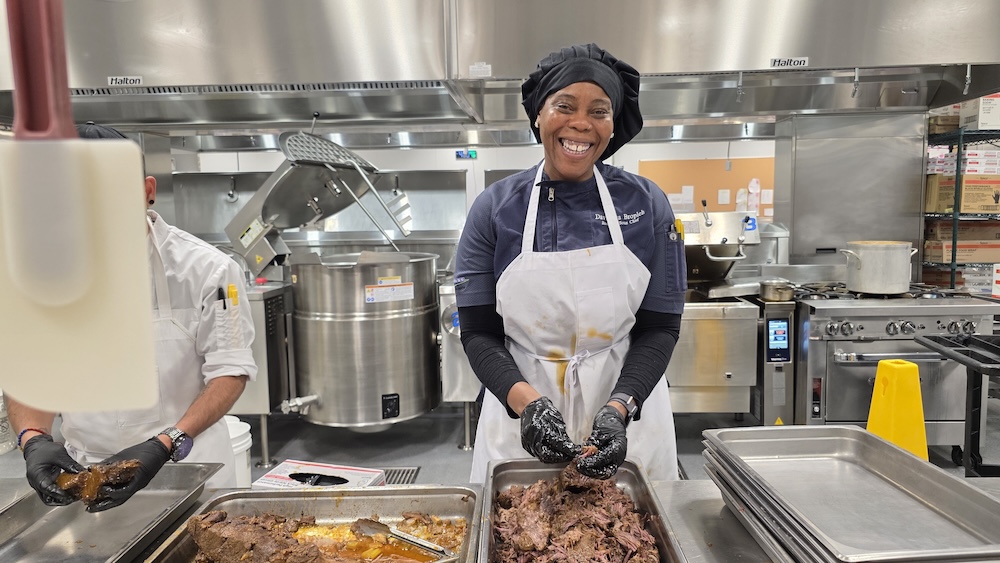
Chef DeeDee shredding beef to reduce portion size. Photo courtesy ReFED.
Communicating to the chef directly that cutting food waste and costs is a goal is also key. “Ask them what their philosophy is on food waste, because most of them were taught [about that] in culinary school,” Crouch said. “There were many ways that a restaurant chef learned that they need to be resourceful to make sure that they’re making a profit. So if restaurants can do it, then that same philosophy needs to come into the convention world … [where] there is this longstanding concept of overabundance. We’ve got food every time we turn around the corner — and we are just inherently making more waste because of that mindset.”
Change “is going to take time, because you’re deinstitutionalizing norms across an industry that have been built up for decades, if not longer,” Pearson said. “So there’s no instant fix to this, but it’s getting everybody talking about it differently so that the staff at these events aren’t … wanting to fill the scrambled egg chafing dish [toward] the end of the event and nobody’s even eating any more of it. It’s hard. It’s hard to do that and to change those norms.”
Earn CMP Credit
Earn one clock hour of certification by visiting pcma.org/convene-cmp-series to answer questions about the articles in this cover story package. The Certified Meeting Professional (CMP) is a registered trademark of the Events Industry Council.
Jennifer N. Dienst is senior editor of Convene.
 Coming to the Table
This article and those listed below are part of Convene’s April 2026 issue cover and CMP Series story package.