 Log In


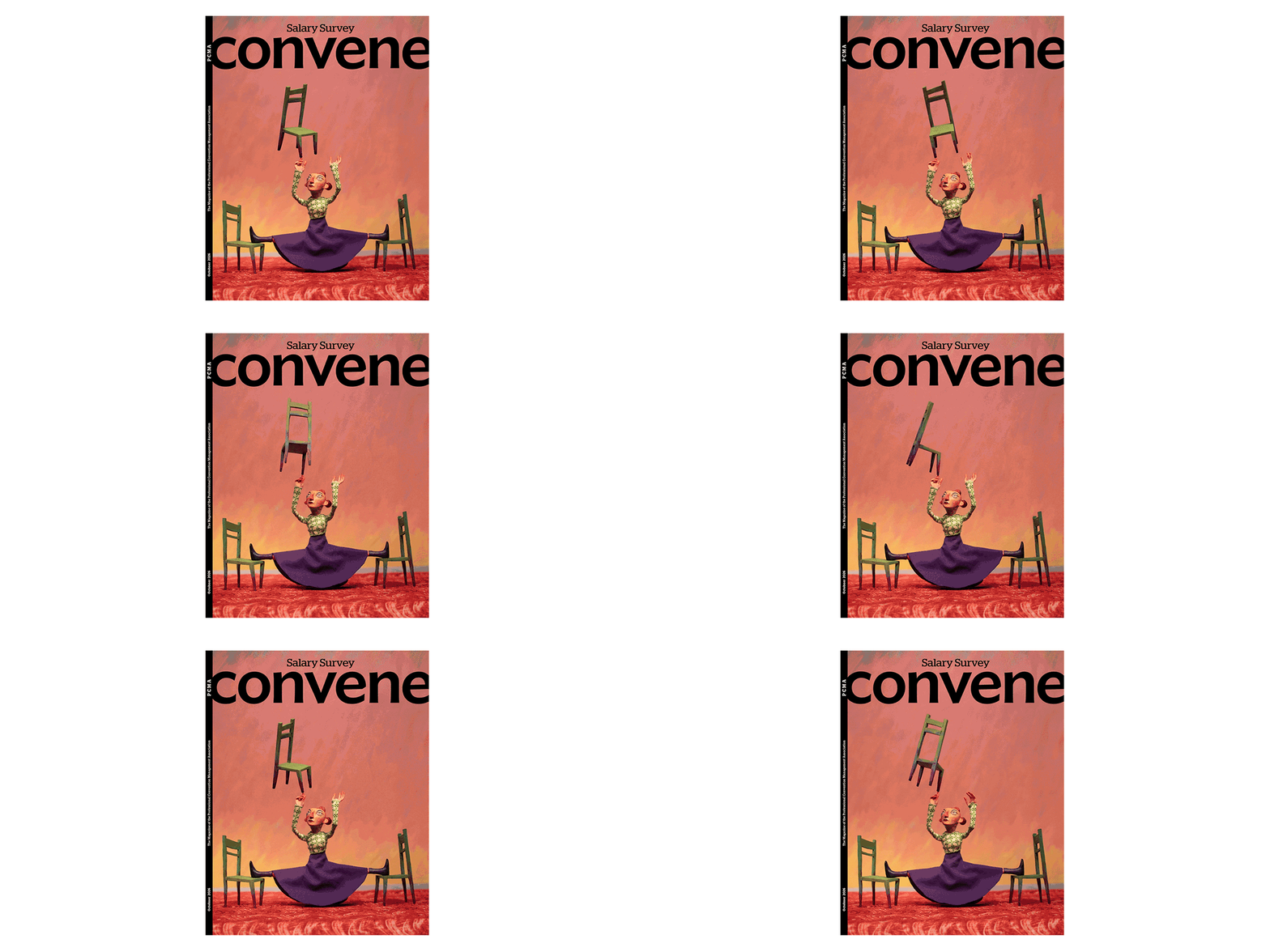
Illustration by Red Nose Studio.
Throughout this year’s Salary Survey, concerns about workload, staffing, flexibility, career growth, and leadership emerge alongside pay scale. Together, they suggest that many professionals are evaluating the overall quality of their work experience rather than compensation alone. In many ways, the findings reflect a balancing act, as professionals weigh financial considerations against the support, resources, flexibility, and opportunities they need to succeed in increasingly demanding roles.
Each year, we analyze salary insights from meetings and events While compensation remains a core focus, the survey goes far beyond the question, “What are you being paid?”
We review and refine the questionnaire each year, retaining key benchmark questions while introducing new ones that reflect current industry trends and challenges. We also seek to understand how professionals feel about their work, where they find meaning and opportunity, and the challenges they encounter as they navigate an industry being reshaped by technological change, workforce expectations, and evolving attendee demands.
The result is a deeper look at the professional experience, exploring not only compensation but also job satisfaction, career fulfillment, workplace support, leadership, and professional development. The findings also underscore a profession that continues to view its work positively.
The 2026 Salary Survey gathered input from 1,011 business events professionals who plan, market, and lead business events around the world. Although respondents spanned multiple global regions, more than 90 percent of the final sample was based in North America. The findings paint a picture of a workforce that is committed to its work while navigating heavy workloads, expanding responsibilities, evolv- ing attendee and stakeholder expectations, and ongoing cost-of-living pressures. The analysis below digs into these numbers.
When Raises Don’t Feel Like Progress
Although a majority of respondents (56 percent) expect to receive a raise in the coming year and nearly two-thirds received raises during the past year, almost two-thirds believe their pay has failed to keep pace with increases in the cost of living.
Historically, raises have served as a visible measure of professional progress. But this year’s findings suggest that event professionals may measure progress differently.
A larger paycheck does not necessarily translate into greater financial confidence if everyday expenses are rising at the same time. Simply put, many respondents are not just questioning what they earn. They are evaluating whether the demands of the job are matched by the support, resources, and opportunities their employers provide to help them succeed.
When More Is Too Much
That equation becomes clearer when viewed through the lens of workload.
More than 80 percent report taking on additional responsibilities during the past year. For many, those responsibilities stem from organizational growth, restructuring, staff reductions, or long-vacant positions. Only 17 percent say their responsibilities have remained unchanged.
Nearly half of respondents work between 41 and 50 hours per week, and almost one-quarter work more than 50 hours weekly. Meanwhile, nearly four in 10 classify their workloads as unsustainable, while one in 10 describe them as completely unsustainable.
Forty-one percent reported taking 10 days off or fewer during the past year, and those taking less time away also reported higher levels of workplace strain.
This year’s survey indicates that these respondents are not simply working harder. They are being asked to manage more projects, learn new skills, adopt new technologies, and deliver increasingly sophisticated event experiences while many continue to feel financially constrained.
The Challenge Behind the Challenge
When respondents were asked to identify their biggest challenge, they pointed overwhelmingly to operational pressures. While no single challenge dominated the results, workload and staffing ranked first, cited by 19 percent of respondents, followed by burnout and stress and compensation both at 16 percent each, and leadership and organizational alignment at 14 percent. The distribution suggests that work- place pressures are being felt across several fronts rather than concentrated in one area alone.
Respondents did not appear to be struggling with whether they can adapt to change. In fact, the survey suggests they are adapting well. Instead, some are questioning whether organizations are adapting quickly enough to support the people being asked to do the work. Organizations, in other words, may have largely solved where work happens. They have not necessarily solved how work is distributed.
 Subscribe to Convene.
Want deep-dive insights on events delivered to your inbox? Sign up for our newsletters
Passion Persists
Despite these pressures, this year’s survey responses do not depict a profession preparing for an exit. Job and industry satisfaction remain strong, and many respondents continue to express confidence in the value and impact of their work. Seven in 10 rate their job satisfaction at 7 or higher. Industry satisfaction is even stronger, with more than half of respondents rating the profession an 8 or higher and as stated earlier, more than 10 per- cent giving it a perfect score.
One-third of respondents say they have no plans to change jobs in the next year, while 44 percent would consider changing jobs if the right opportunity became available. Another 20 percent are actively seeking a new role. Higher compensation remains the leading motivator for considering a move, followed by career growth opportunities and work-life balance. Leadership quality, organizational culture, workload concerns, and flexibility also play important roles for these respondents.
Beyond the Paycheck
The findings suggest that retention is not purely a compensation issue. Increasingly, it is a workplace experience issue. This year’s survey shows that professionals are evaluating employers on far more than salary alone.
While compensation remains a key factor, career growth opportunities, leadership and organizational culture, workplace flexibility, workload sustainability, and employer support for professional development all emerged as important considerations.
Notably, employees with no plans to change jobs were more likely to report receiving employer support for professional development than active job seekers (88 percent versus 73 percent).
Those priorities resurfaced when respondents were asked what would most improve their work experience aside from compensation. The answers were remarkably consistent: stronger staffing levels, more manageable workloads, clearer career paths, meaningful advancement opportunities, stronger leadership, greater flexibility, professional development, and greater recognition.
AI Moves From Experiment to Expectation
One of the more dramatic elements in the 2026 survey responses involves artificial intelligence.
Generative AI has become nearly universal among these respondents, with 96 percent reporting some level of use and 70 percent using AI at least weekly. AI now supports everything from research and data analysis to strategic planning, productivity, and event management.
Most professionals view these tools positively. Sixty percent believe AI will improve productivity, while half expect it to reduce routine work. Fourteen percent anticipate job-security concerns. Yet one important caveat emerges. Nearly one-third believe AI will increase workplace expectations without increasing compensation.
That concern mirrors the broader findings throughout the survey. Professionals generally welcome innovation. What they question is whether greater efficiency will create more sustainability or simply higher expectations.
Finding Balance
Ultimately, the 2026 Salary Survey reveals a profession caught between rising costs and rising expectations. Compensation matters. But com- pensation alone no longer explains how professionals evaluate their careers. The balancing act facing today’s event professionals is not simply financial. It is the challenge of balancing performance, ambition, and well-being at the same time. And judging by this year’s findings, that may be the defining workplace question facing the profession today. We are thankful to all who participated in this year’s survey.
View a PDF with the Salary Survey Graphics here.
Survey and analysis conducted by Convene Digital Media Editor Magdalina Atanassova, who used several generative AI tools for assistance. Overview by Convene Editor in Chief Gabrielle Weiss.
All material © 2026 by PCMA
More From the Salary Survey
Earn CMP Credit
Earn one clock hour of certification by visiting pcma.org/convene-cmp-series to answer questions about the articles in this cover story package.
The Certified Meeting Professional (CMP) is a registered trademark of the Events Industry Council.